
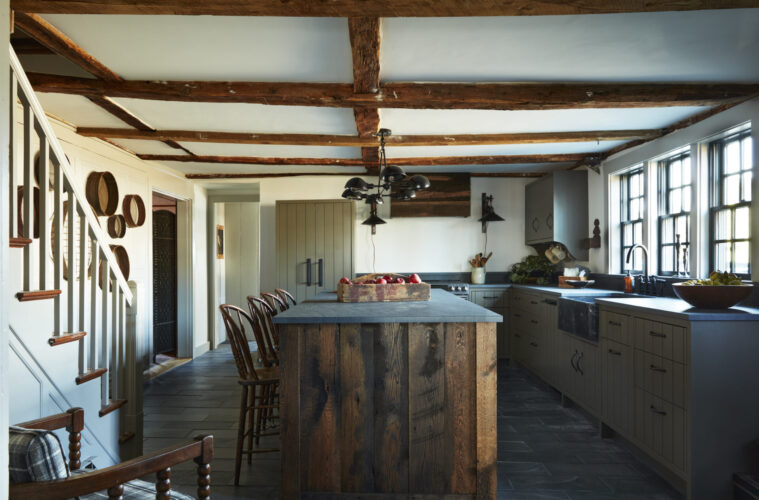
How can a design team renovate a nearly 400-year-old house with ties to the Salem Witch Trials while retaining its historical character, making it work for modern living, and doing it all within the house’s existing footprint? That was the challenge for Essex-based Kristina Crestin of Kristina Crestin Design and her team, who were tasked with breathing new life into the kitchen, dining room, mudroom, and downstairs bathroom in the John Proctor House in Peabody after a leak from frozen pipes caused major water and mold damage.
Crestin worked on the project during an episode of the HGTV show “Farmhouse Fixer” alongside Jonathan Knight and Ipswich-based Curran & Sons Construction, which also provided custom cabinetry through its millwork shop, Northshore Custom Woodworking. Although the downstairs renovation came about because of necessity, it was still a labor of love for the homeowner, who purchased the1638 First Period house after seeing it on TV.
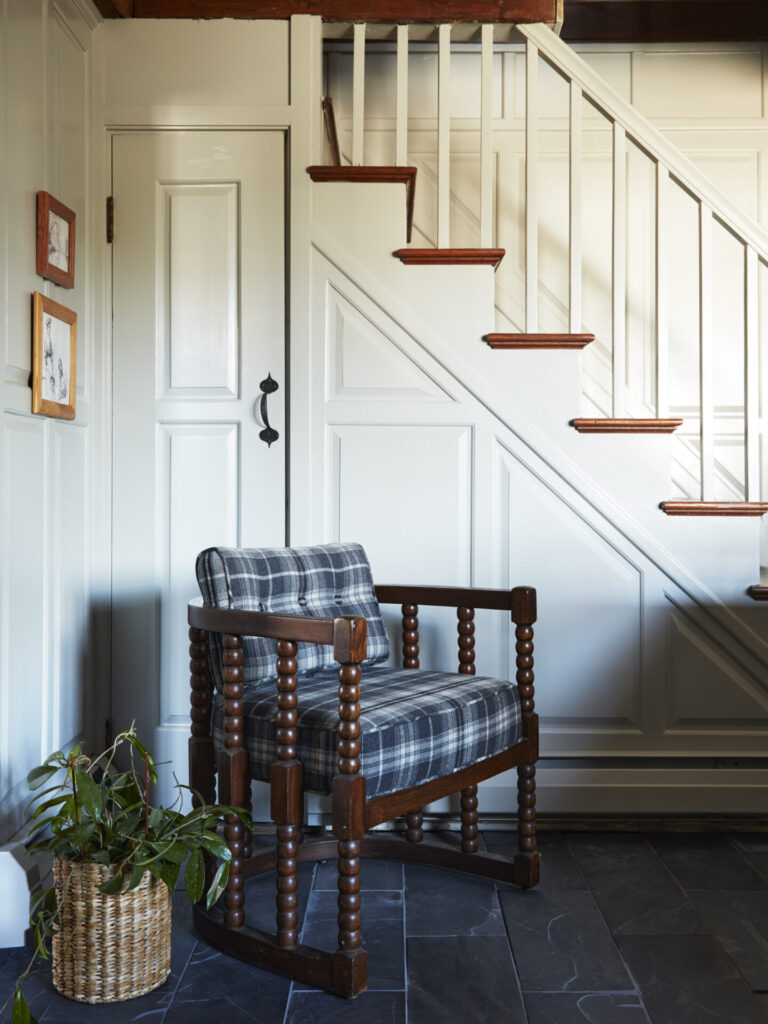
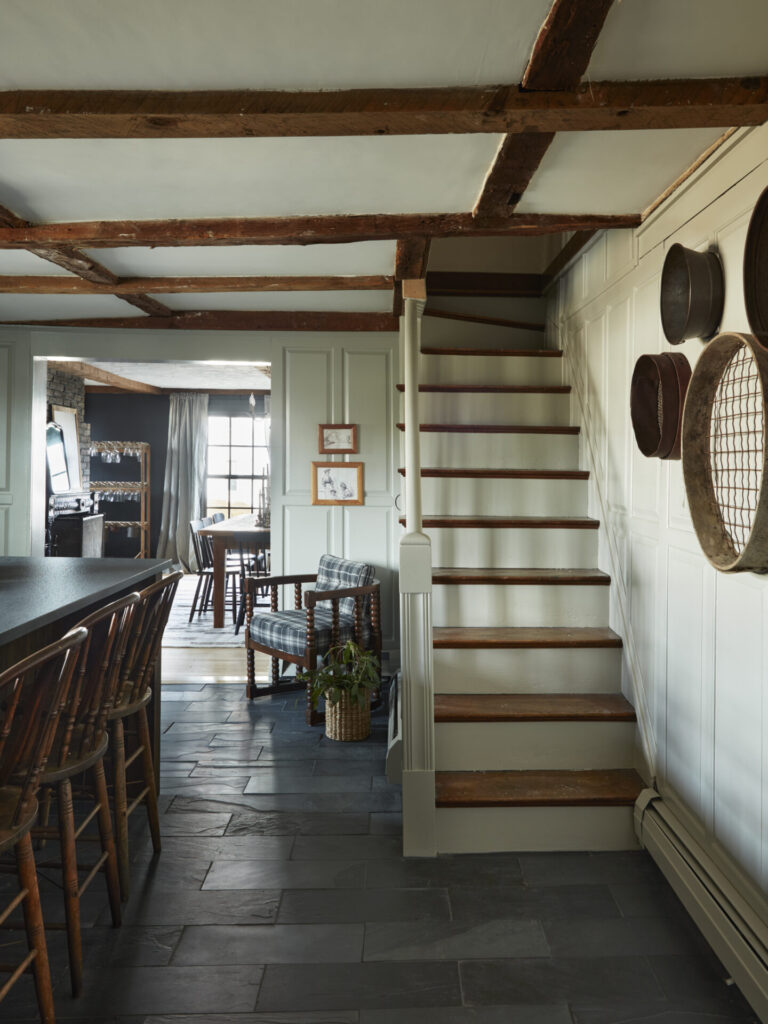
“This homeowner lives on the West Coast, and she saw a spot on a morning national news channel about how the John Proctor house in Massachusetts was up for sale. And she felt like she needed to save this house,” says Crestin, who also worked on another part of the house in a previous episode of “Farmhouse Fixer.” Despite the house’s centuries-old pedigree, doing a period-authentic historic restoration wasn’t the goal. Instead, the homeowner wanted the home to “feel authentically old” while still being suitable for modern-day living. And since the building was once a tavern, she decided to lean into that history. That meant embracing dark colors, lots of texture, and a low ceiling with the original beams exposed and the plaster around them replaced and painted in White Wisp by Benjamin Moore.

“We purposely brought in a highly textured slate floor that maybe felt like it was indicative of what you would have quarried locally back in the day,” Crestin says. The dark floor blended beautifully with the nickel gap perimeter cabinets, painted a rich, earthy Aegean Olive by Benjamin Moore. They clad the island and oven vent hood in reclaimed white oak from Longleaf Lumber in Cambridge that still had what’s known as “skip-hit,” or saw marks, on it. Letting those imperfections show heightened the historic look that the homeowner wanted to achieve.
“We embraced the fact that the old skip-hit and barely sanded wood was going to take the stain in a weird way and not feel perfect,” Crestin says. While slate might have been a traditional choice for the countertops, the team opted instead for granite with a leather finish, giving the homeowner the practicality of granite with the look and texture of a more historically accurate material. They used similar reasoning when choosing the dark carved stone sink, rather than something more modern like undermount stainless steel or a white farmer’s sink. The black cabinet pulls recall the cast iron that might have been in a period home, while a pair of black hanging sconces flanking the range “felt really old and interesting,” Crestin says.
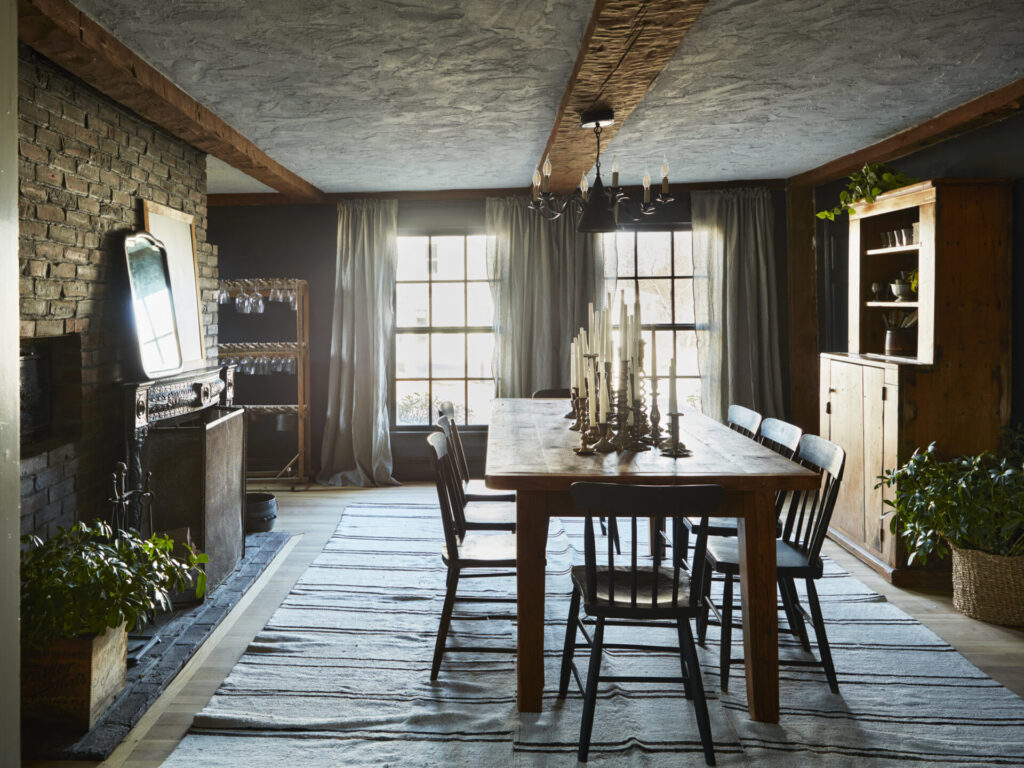

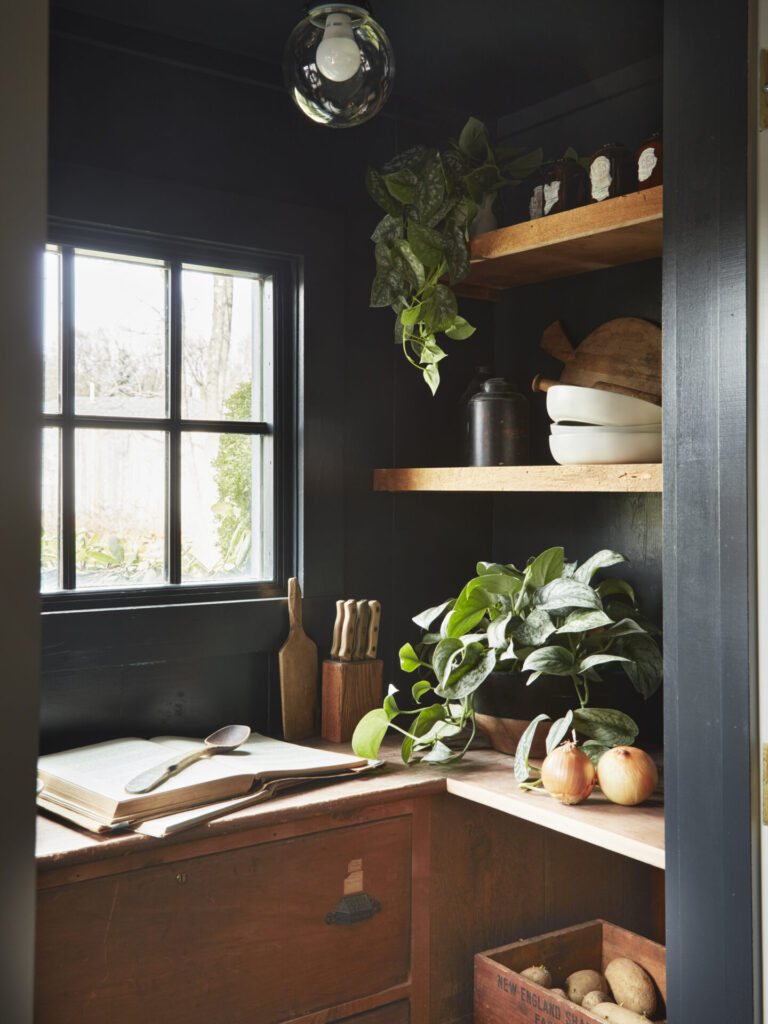
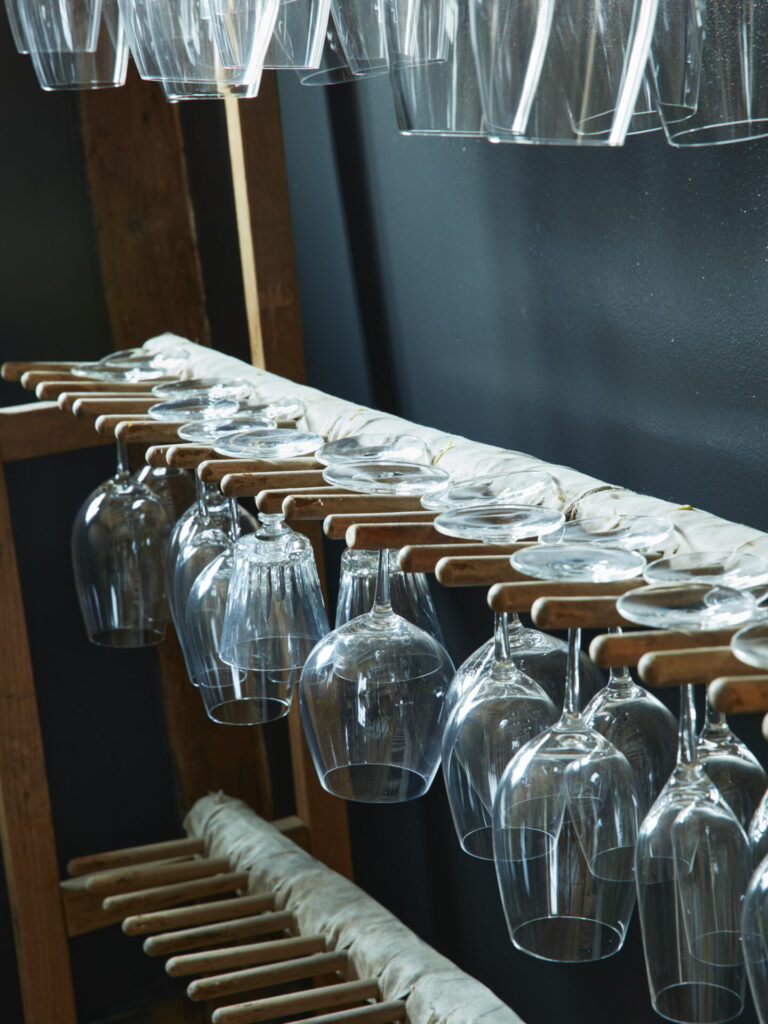
The home’s history also forced the team to get creative. Because they couldn’t move the historic door and window locations, they fashioned a pantry nook by nailing shut an unused back door. They kept the door’s small window for light, painted the walls black, and retrofitted and repurposed some old storage drawers they found in the attic. A set of salvaged antique closet doors in the back entryway were stripped of their paint but still have “nooks and crannies” in the wood, giving them an aged, weathered look. While the team’s “light touch” in the dining room included only refinishing the floors and painting the walls Black Ink by Benjamin Moore, they got creative with storage, there, too, repurposing an old cobbler’s rack for hanging glassware.

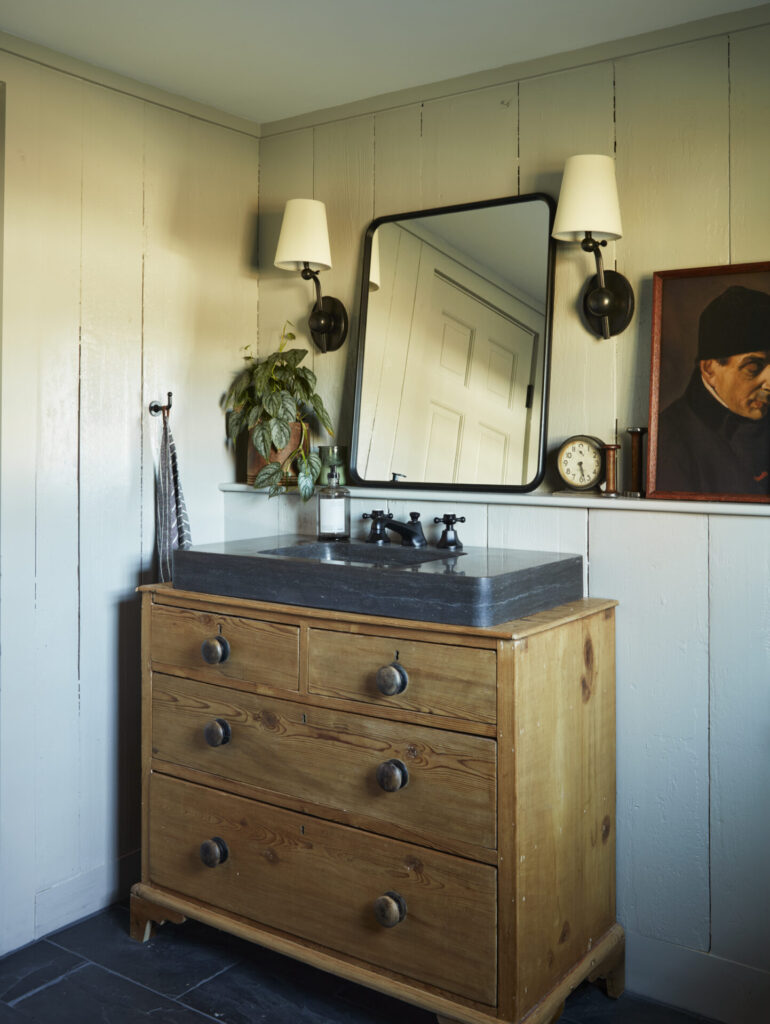
They took a similar approach in the bathroom. Since indoor plumbing wouldn’t have existed in the 1600s, historical accuracy wasn’t the goal. Instead, they went after an old look, repurposing an old dresser into a vanity and topping it with a dark stone sink. Reclaimed wood on the walls painted Mindful Grey by Sherwin-Williams added to the vintage look. And in a cheeky nod to historical preservation, the team even framed and dated fragments of the broken pipe and hung it on the wall. “We’re always trying to think through every detail,” Crestin says.