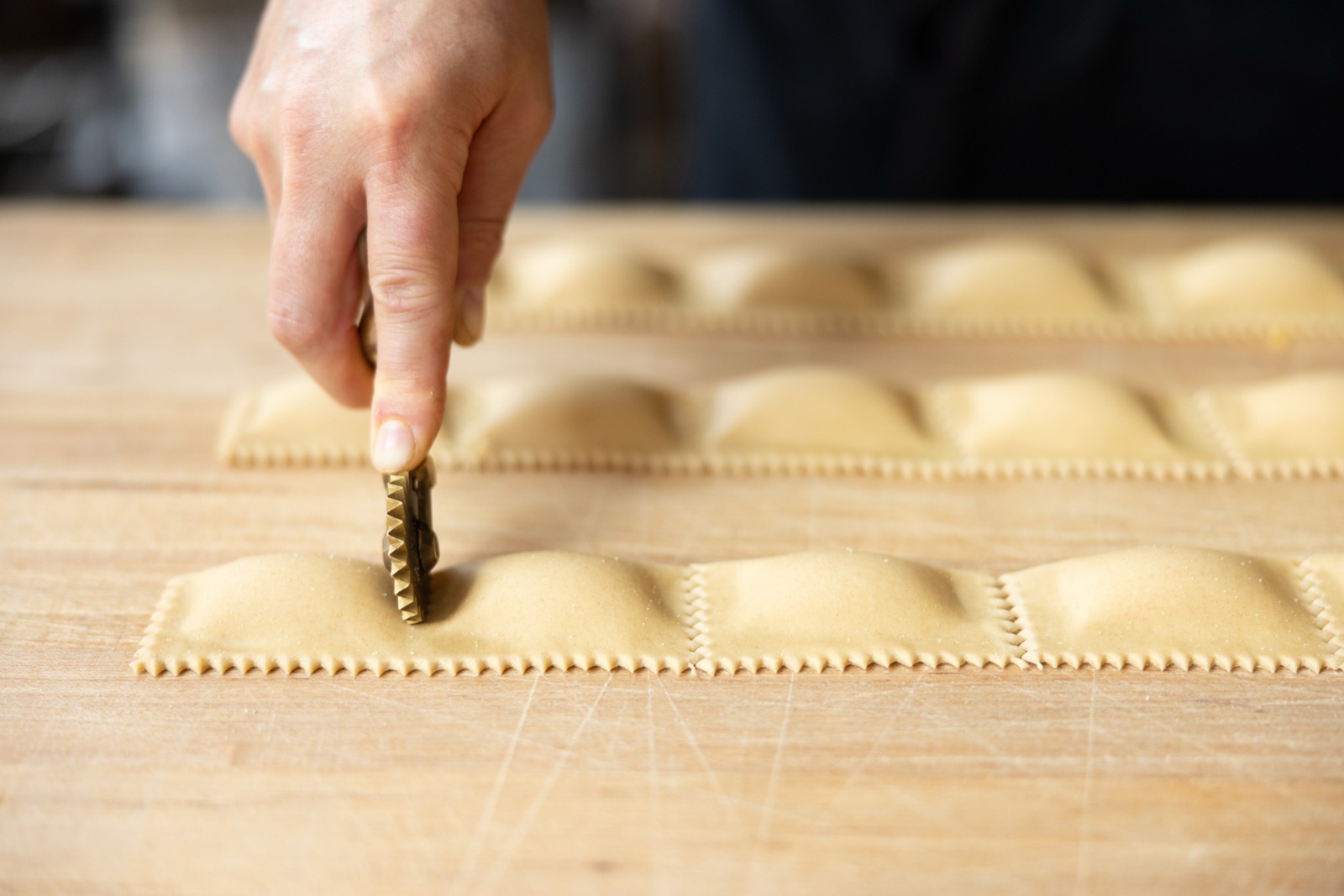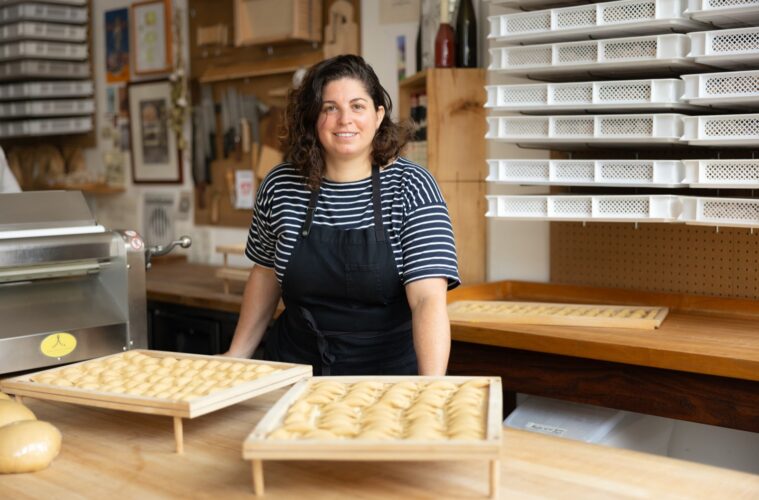
Walking into Danielle Glantz’s downtown Gloucester shop, Pastaio Via Corta, you feel instantly transported to Italy. The journey a customer takes exploring her shop—which sells fresh organic homemade pasta, real Italian provisions and natural wines—reflects the journey Glantz has taken since opening the shop 10 years ago. “It has evolved as I have evolved and all my customers have evolved with me. A need in the community of really good food and sourcing from a transparent perspective, bridging people to who are their producers, artisans, and farmers. When I started, I would have never imagined what it would have evolved into,” says Glantz.
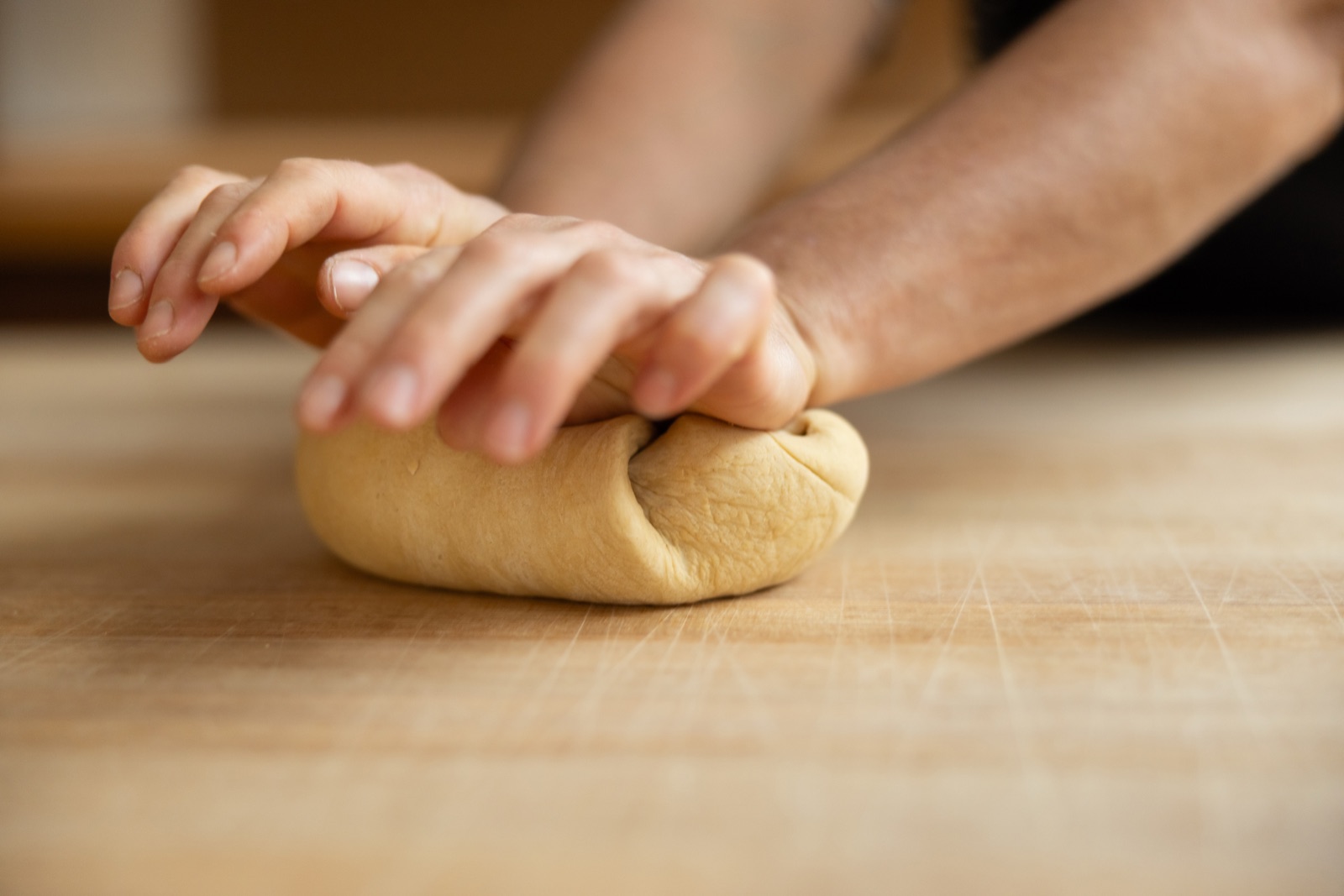
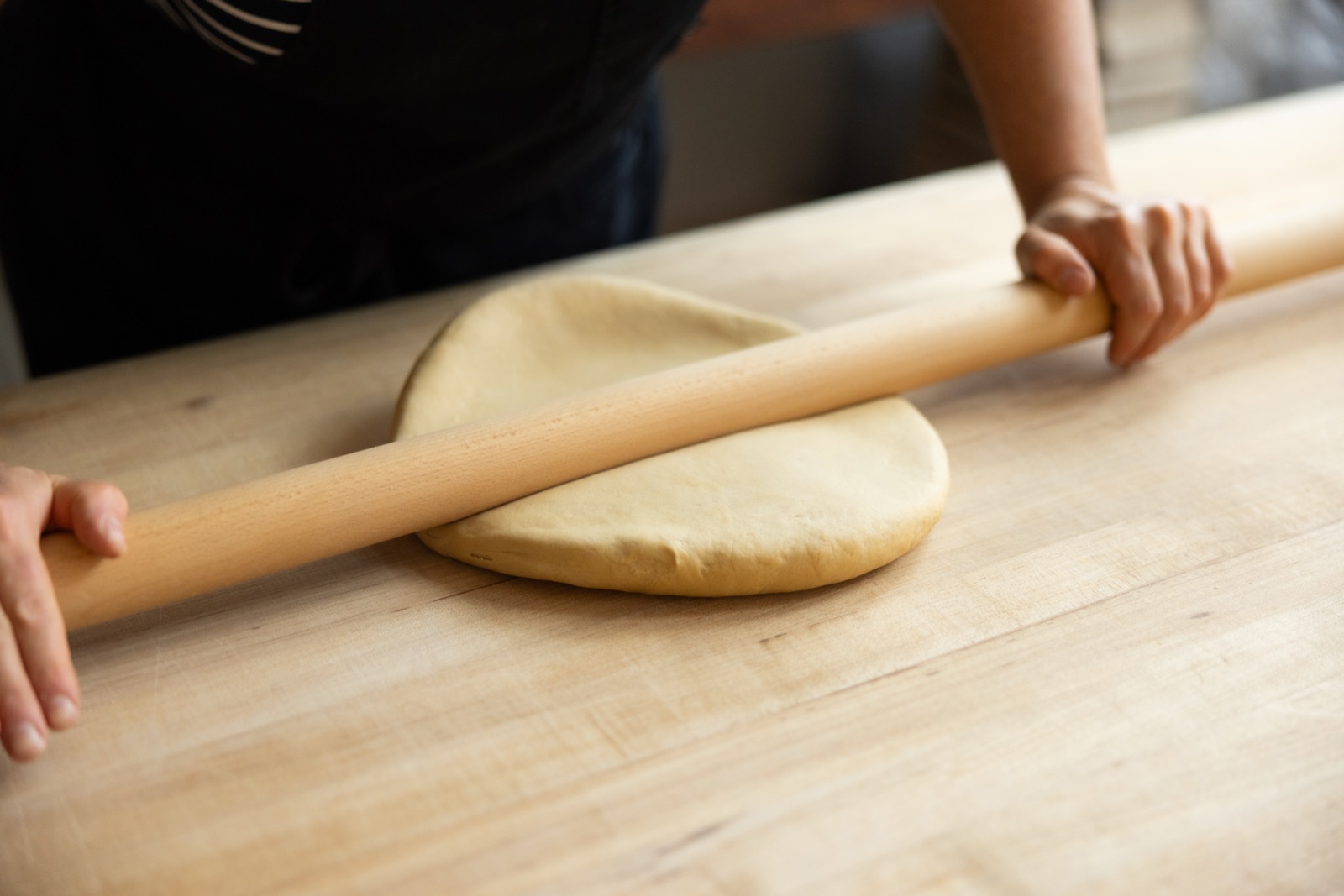
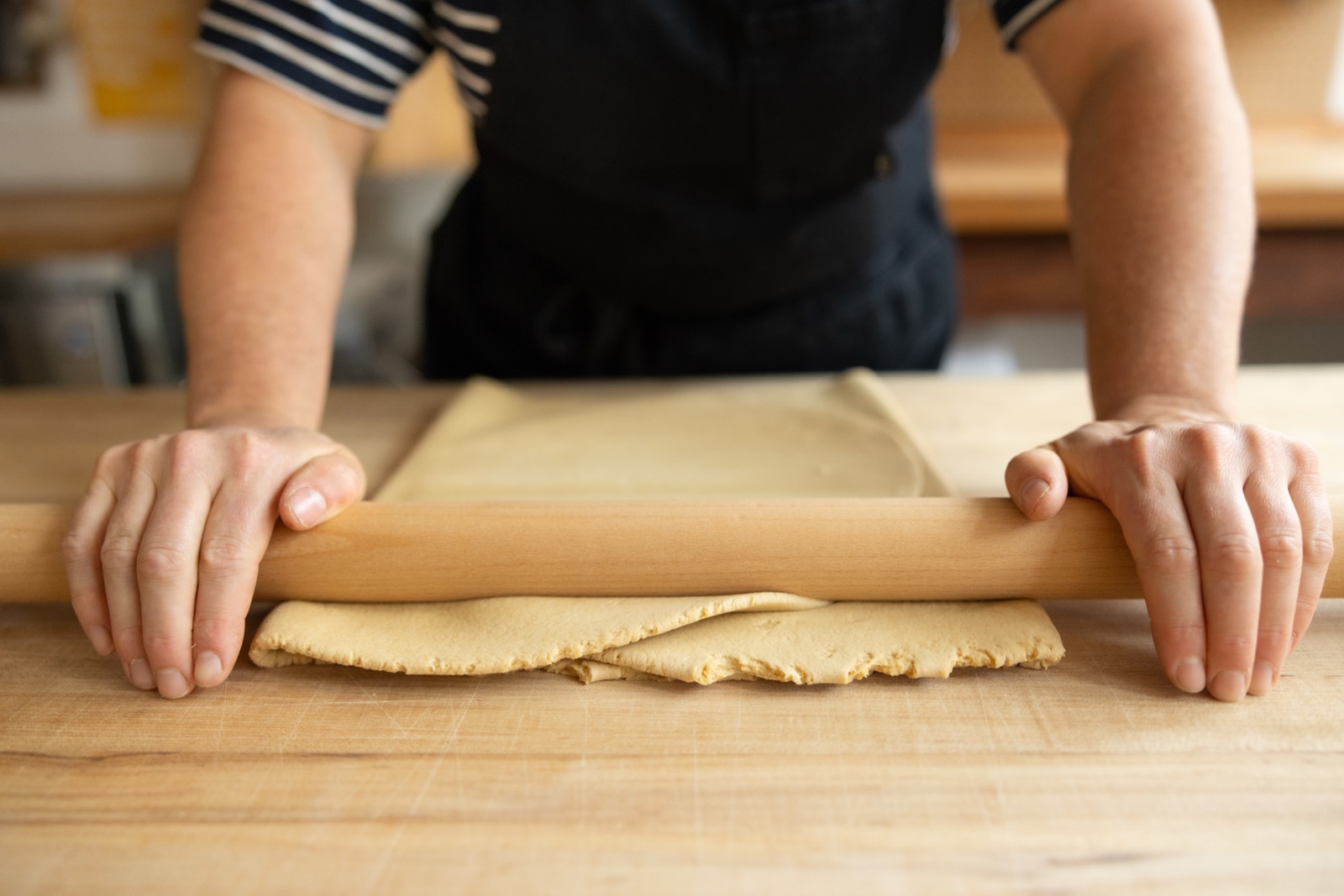
The past decade has seen a move to a larger space on Main Street, the addition of a natural wine section, and the progression from a solo venture to a full staff of employees. Glantz still maintains the exceptional quality of her small-batch organic stone-ground heritage and ancient wheat handmade fresh pasta and bronze-die-extruded dry pasta. All the shop’s fresh and dried pasta is produced solely by Glantz. “Working the machine and the extruder isn’t as easy as it sounds because it still needs a human hand. To be spot on with it, it requires a lot of knowledge based on using that type of machinery,” explains Glantz.
The Cookbook
The shop’s 10th anniversary is marked by her cookbook, Pastaio Via Corta by Danielle Glantz and Katie Parla. “I was more concerned about having easy recipes for people to use and just simple techniques that I found over the last 10 years that I’ve been teaching people how to cook and how to cook a simple thing properly. Because I think if you can cook pasta well, that’s one meal you got down and can cook for not only yourself, but you can cook for loved ones or other people,” says Glantz, “The 17 recipes in there are ones that are the most asked for, with some really unique ones.”
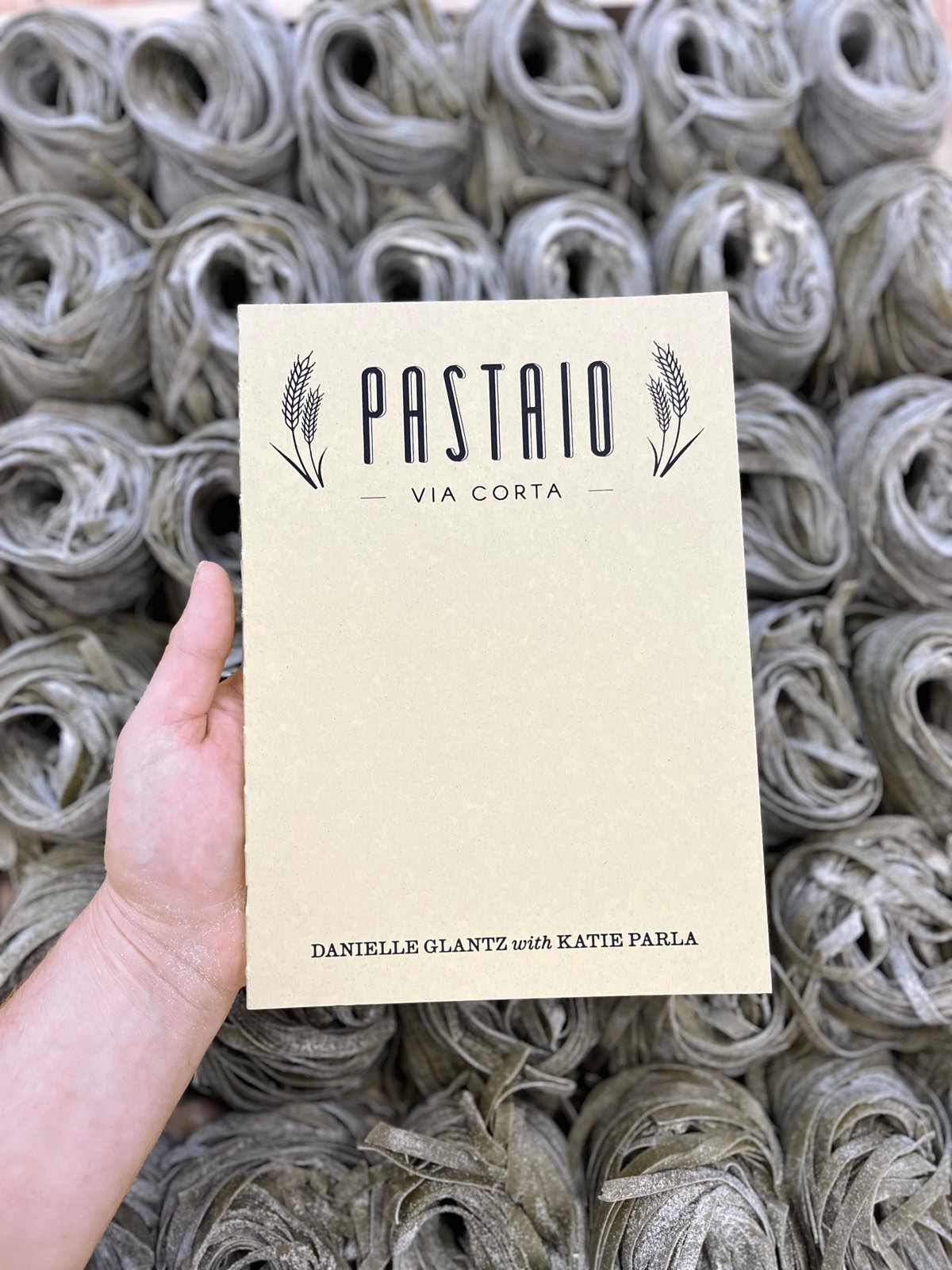
The paperback edition reflects the same care, passion, and artistry Glantz puts into making her pasta. Parla, an experienced cookbook author (she has written, edited, or contributed to more than 40 books), worked with Glantz to write the cookbook, and also guided her through the publication process. The pair worked in Venice, Italy, to draft the book, taking an outline to a full draft in just a few days. Using Grafiche Veneziane, a printing house cooperative company in the city center of Venice, they chose each element of the book.
“I really wanted the book to lay flat so people can cook out of it because there’s nothing worse than a cookbook that you can’t lay flat. Then I wanted it to be coptic binding, which is that ancient Egyptian binding. Because if you do a glued binding, it always comes apart, and I really like the threading on the outside and I want people to see that it’s a specific style, but all the paper is from a paper company in Italy and Germany. They work without using a chemical process, and they work with pulp left over from harvest, like wheat and olives to make the paper, and it’s all recycled paper, and that was important to me,” details Glantz.
Instead of photography, Glantz used local Rockport artist, Morgan Dyer, to create beautiful, detailed illustrations including maps of Italy and the North Shore, recommended cooking equipment, ingredients, and pasta-making techniques. At the beginning of the recipes, Glantz includes, “With Every Ingredient, a Narrative Unfolds, a Story Is Told.”
“There’s always a story first. There’s always a story, but I wanted to make sure that it really drew you in and it captured you, but it wasn’t too long and it wasn’t too short, and it had enough information in there,” says Glantz.
The cookbook is available at the shop and through its website.
When asked what her favorite recipes were in the cookbook, Glantz talked about the spaghetti al pomodoro, pasta al forno, and the pasta crudaiola, but it is her nephew’s favorite recipe that stands out. “The one recipe I was surprised by when I tested all the recipes on my family was the spaghetti con la bottarga with a cured mullet roe from Sardinia. My nephew is now four, he was three at the time when he was eating it, it was his favorite thing. It is an egg sac of the fish that’s been salted and cured. It just makes a really creamy pasta that’s full of umami.” Glantz recalls fondly.

Sourced From Italy and Close to Home
Every item in the shop is either sourced locally or imported straight from Italy, something that is reflected in the book. During the shop’s annual shutdown from mid-January to the beginning of April, Glantz takes a buying and educational trip to Italy to meet directly with the producers of every item she carries in the shop and learns the story behind the ingredients and production. Over the years she has taken her employees with her to expand their education.
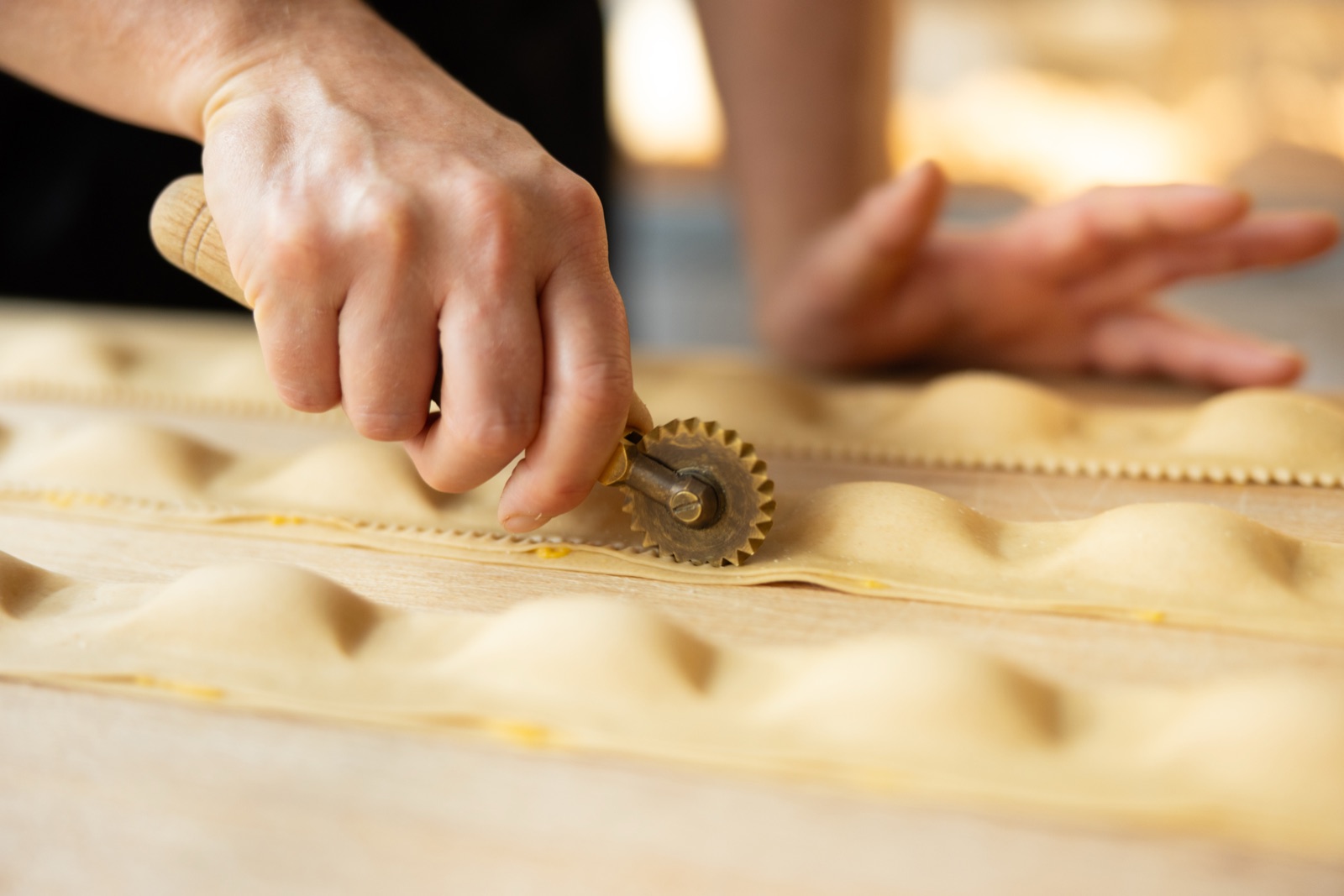
Glantz works with two mills—located in upstate New York and Maine—to source all the flour used in her pasta-making. A certified organic, non-GMO durum semolina is the base for the extruder, but then she works with hard wheat and soft wheat. Overall, there are 10 grains that she works with. The pasture-raised organic, non-GMO-fed eggs for the fresh pasta are sourced locally. Local vegetables and herbs are grown by Iron Ox Farm in Hamilton and Cedar Rock Gardens in West Gloucester.
Tyler, a staff member with a wealth of knowledge, guides me around the shop as I select from their scratch-made sauces and pastas. Back home, an easy dinner of their flavorful marinara sauce and fresh pappardelle is a heavenly trip to Italy, no plane ticket required.