

On a dark, damp March evening, the bright, welcoming Illume Books in Newburyport was filled with laughter, the clacking of tiles being shuffled, and the familiar calls of “bams, dots, and cracks.” All three rooms of the Market Square bookstore were occupied by tables of four players, each set with colorful tiles, racks, mats, shufflers, and dice—the essential components of mahjong (also spelled Mah Jongg).
Looking for a new hobby that doubled as a social outing, I found myself at an Illume Mahjong Club Play Night—an introduction to one of the fastest-growing game trends. According to the National Mah Jongg League (NMJL), the rummylike game, played with tiles instead of cards, originated in China, though its exact beginnings remain unclear. Mahjong arrived in the United States in the early 20th century. Founded in New York City in 1937, the NMJL established standardized rules and publishes an annual card each spring outlining that year’s official hands.


Illume is one of two North Shore businesses catering to mahjong’s resurgence. Owner Jen Perry, who opened the bookstore three years ago, has cultivated what sociologists call a “third place”— a social environment outside of home and work—through book clubs, Studio Series programs (small, immersive reading and discussion groups), game nights, workshops, author events, and rotating gallery exhibits.
“Mahjong at Illume began because I wanted to learn the game,” Perry says. “In the spring of 2025, I hired a teacher, and a small group of us learned together. From there, it grew into a wonderful community. Now I play at least twice a week— anytime I can get a seat at the table.”
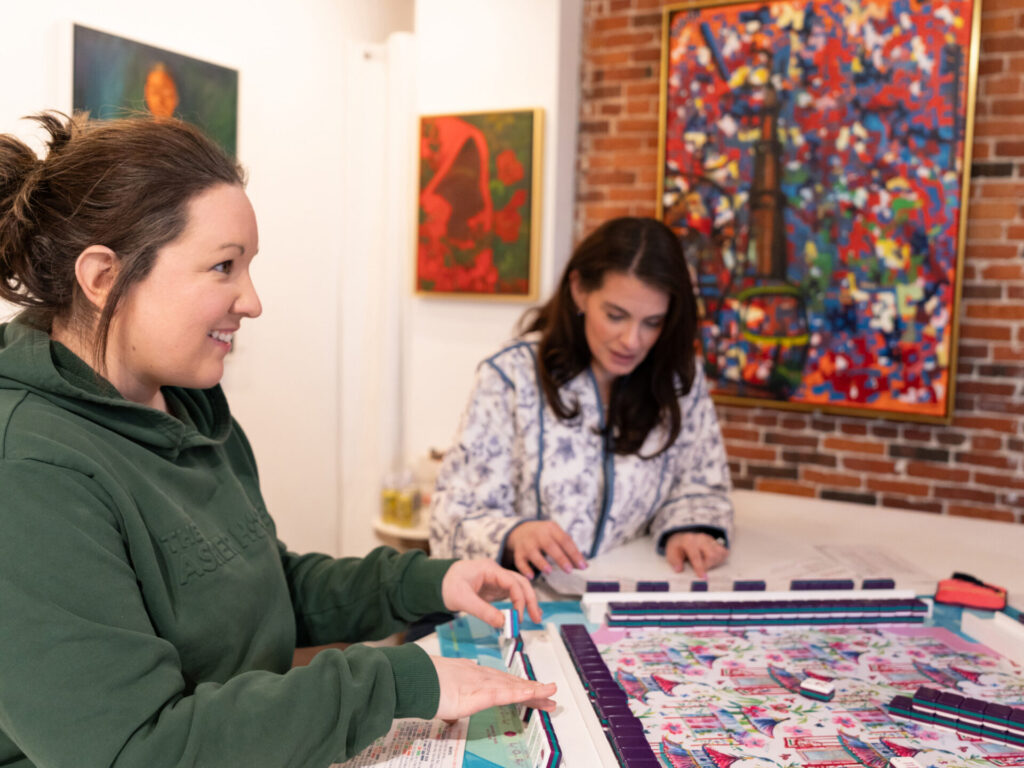


Illume now offers lessons, a Play Club with twice-weekly sessions for members, and open play for visitors and casual players. The store has already hosted two five-week leagues and plans to introduce tournaments later this year. Attending as a guest on a Play Club night, I learned the group has grown to about 70 members, with sessions offered throughout the week. Member Jacquie Levasseur invited me to observe her regular table of friends. While I absorbed the game’s many rules and technical nuances, what stood out most was the sense of warmth and belonging.
“My friend Lisa mentioned she wanted to sign up for lessons,” Levasseur says. “We had taken golf lessons together and thought this would be a good pivot. I wasn’t even sure how to pronounce ‘mahjong’ at first—I thought it was a card game. Now it’s a great way to get together, meet new people, keep my mind sharp, support local business, and just laugh at ourselves.” Levasseur plays at least once a week at Illume and also hosts games at home. Her friend Karen Conte travels from Salem, New Hampshire, to play regularly.

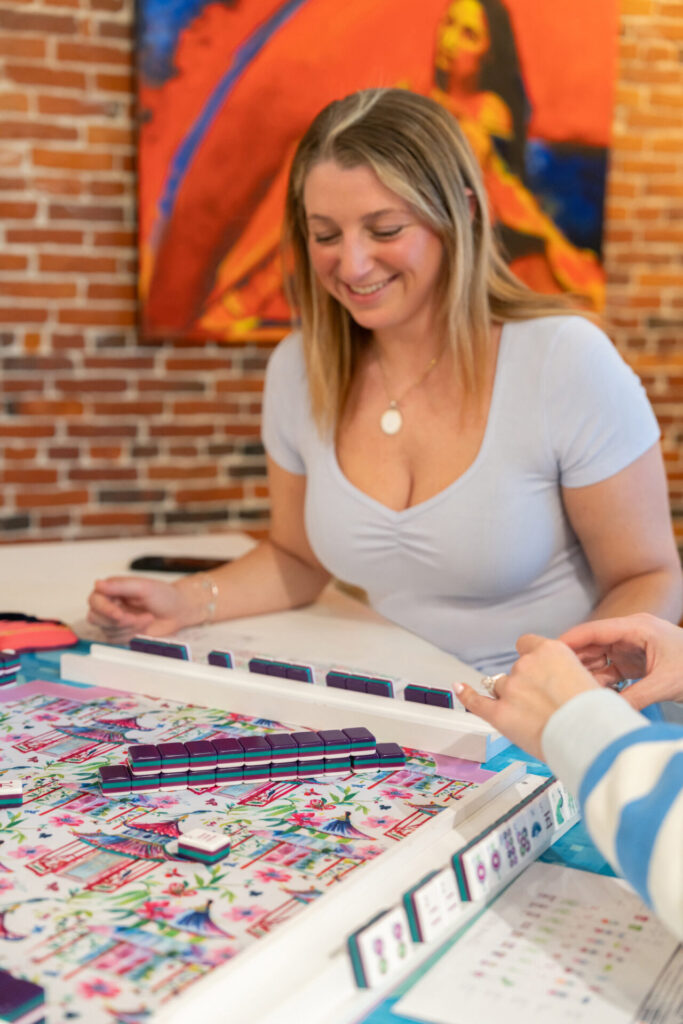
Mahjong’s popularity appears to be surging among Gen X and millennial players. Marisa Caputo, in her early 30s, says the appeal is simple: “People are looking for ways to spend time together that aren’t centered around phones or going out. Mahjong fills that gap. It’s social, a little competitive, and gives you something to do while catching up. Plus, it has this cool, aesthetic vibe that a lot of people our age are drawn to.” Perry sees that cross-generational appeal firsthand. “All ages and genders are playing mahjong at Illume,” she says. “It ranges from my daughter Elle, who is 19 and one of the best players I know—and now teaching her college friends—to players in their 80s who join us every week.”
Mahjong’s resurgence extends beyond gameplay into lifestyle and retail. Illume carries brightly colored sets from Oh My Mahjong in mix-and-match hues—greens, blues, pinks, and purples—alongside a growing market of mahjong-themed accessories, from tote bags to tumblers. The other North Shore hub is North of Boston Mahjong (also known as Mahjong & Mulligans), founded by Lytania Mackey Knowles and Amy O’Connor. Their business grew out of a shared passion for the game and teaching others. They offer beginner lessons, private instruction, strategy sessions, corporate events, and leagues hosted in partnership with local restaurants and hospitality venues.


“I play with my original mahjong group at least once a week and try to squeeze in a second game whenever possible,” says O’Connor. “I also practice against online bots almost daily.” Mackey Knowles takes it a step further. “I play weekly, but I also practice ‘four-handed solo’ mahjong against myself,” she says. “During the week, my husband and I play Siamese mahjong, which is a two-player version. I’ve also been learning Chinese mahjong and practicing online and with neighbors.” For both founders, the game’s greatest appeal lies in its ability to foster connection.
“I love seeing mahjong become the ‘third place’ for our community—that essential space outside of home and work,” says Mackey Knowles. “It brings joy, especially for people who have spent years prioritizing everyone else. We often hear how hard it is to make friends as an adult. Mahjong creates that opportunity naturally.”
O’Connor agrees. “The image of mahjong as ‘grandma’s game’ is changing fast,” she says. “People used to laugh when we played poolside at the JCC, but that’s over. I love teaching young moms, knowing that in 20 years, they’ll be telling the same stories I do.” After my own introduction to the game, I’m ready to recruit some friends, sign up for lessons, and maybe even invest in a set of my own. With community, connection, and laughter built in, mahjong offers more than just a pastime—it offers a place to belong.