
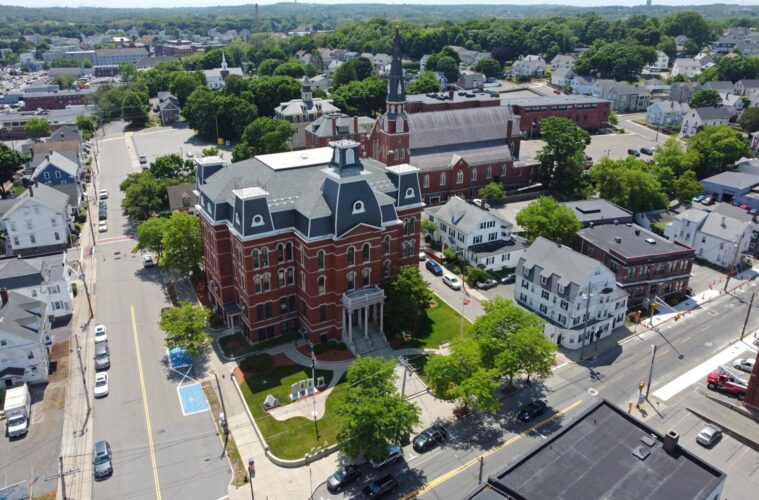
A year after Beverly took the title, Peabody’s 01960 tops Realtor.com’s national list. Local brokers say the reason is simple: the address without the tax bill.
Last summer it was Beverly. This year the crown moves a few exits down Route 128.
Realtor.com named Peabody’s 01960 the hottest ZIP code in America this week, the top spot on a national list the North Shore has now held two years running. It is the third time Peabody has cracked the top 10—No. 5 in 2018, No. 3 in 2021—and the first time the Leather City has finished first.
Maria Salzillo, Realtor-Partner at LAER Realty Partners, LLC. who heads Salzillo Realty Group, was born in Peabody and has watched it get overlooked for most of her life.
“Peabody has always been undervalued,” she says. “People just didn’t see it.”
They see it now. Homes in the city sold in a median of 20 days over the first half of 2026, and they sold for slightly above asking, at a time when the typical American home was going for a discount.
Location and Taxes
Ask Salzillo why buyers are landing here and the answer starts with the location—proximity to Boston—and the city’s tax rates.
Peabody’s commercial base—the industrial park and the Northshore Mall—carries a share of the load that in neighboring towns falls on homeowners. The result is one of the lower residential tax rates on the North Shore. The city’s municipal light plant adds to it, delivering among the lowest per-kilowatt-hour electric rates in the region rather than the investor-owned utility bills that arrive in Beverly or Salem.
Then there is the land. On the west side of Peabody, where the city runs up against Lynnfield, North Reading and Middleton, lot sizes are larger and buyers associate that area with a regard to the abutting towns.
“Buyers love the area and the location,” Salzillo says. “They just don’t want to pay the higher taxes to get it.”
That gap shows up in the sale prices. Peabody’s median asking price hit $667,000 in June, roughly $50,000 above Salem’s recent median sale price of about $614,700—but well below Beverly at roughly $778,600 and Swampscott at about $814,600 over the same three months, according to Redfin figures.
A Market that Tightened
Sale prices in Peabody rose roughly 37 percent between 2020 and 2025, Salzillo says. Although the total number of homes sold may have reduced slightly, fewer homes trading at steadily higher prices is the signature of a supply problem rather than a demand one.
The national figures say the same. In June, for-sale inventory across the country sat 11.3% below pre-pandemic norms; in the 10 hottest ZIP codes, the shortfall ran to 60.5%, more than five times the national gap. Listings in those ZIPs drew three to five times the views of the average American listing and sold 30 to 42 days faster.
“The market is booming,” Salzillo says. “People are looking to move here.”
Demand is also strikingly local: Seven in ten listing views for Peabody homes came from inside the Boston metro area. This is not out-of-state money discovering the North Shore. It is people already here, moving a few towns over.
A Changing Downtown
The other half of Salzillo’s explanation is that the city itself is different than it was.
She credits Mayor Edward Bettencourt’s office with the revitalization of downtown over the past several years—streetscape enhancements, more restaurants, commercial property redevelopment, more reason to walk it. Peabody’s status as a city rather than a town factors in too, Salzillo says.
Housing stock turns over faster here than the regional norm as well, in her experience—closer to every five to eight years, which keeps inventory circulating even when it is scarce.
What it Means for the Rest of the North Shore
Massachusetts placed two ZIPs in the national top 10: Peabody at No. 1 and Westfield, out in the Pioneer Valley, at No. 5. The other eight were suburbs around New York, Philadelphia, Buffalo, Chicago, and Milwaukee. For the fourth year straight, no market in the South or West made the list.
For sellers in Danvers, Lynnfield, North Reading, and Middleton, Peabody’s ranking is a leading indicator rather than a competitor: the same shortage lifting 01960 lifts everything within a 20-minute radius, and buyers boxed out of Peabody bids are the ones at your open house.
For buyers, the reading is bleaker. Realtor.com measures click volume and speed of sale. “Hottest” describes competition. It means the house you toured Saturday is under agreement by the following weekend—and that the North Shore’s housing squeeze has now produced, two summers running, the most contested ZIP code in the United States.
Rankings turn over year to year, but the forces that put Peabody on top of this one have been building since well before anyone was counting. A city that spent a century known for its tanneries now offers something the North Shore has in short supply: room, access, a downtown worth walking, and a tax bill that doesn’t sting. Buyers have noticed, and the people who have lived here all along are watching a market finally catch up to what they already knew. “Peabody has become one of the most desirable—and competitive—markets in the region,” Salzillo says, “with demand that continues to outpace supply.”