

When developer David Hall first set eyes on the property on Cottage Court in Newburyport more than a decade ago, it was not a promising sight.
“It was a collection of junked vehicles and materials that a local landscaper had accumulated there,” Hall recalls. “It was a pretty nasty site.”
Somehow, though, Hall and business partner Keith Moskow saw potential in the lot. They acquired it and spent years cleaning it up, followed by even more years—with more yet to come—designing and building the sustainable, welcoming community they envisioned could grow up in the space.
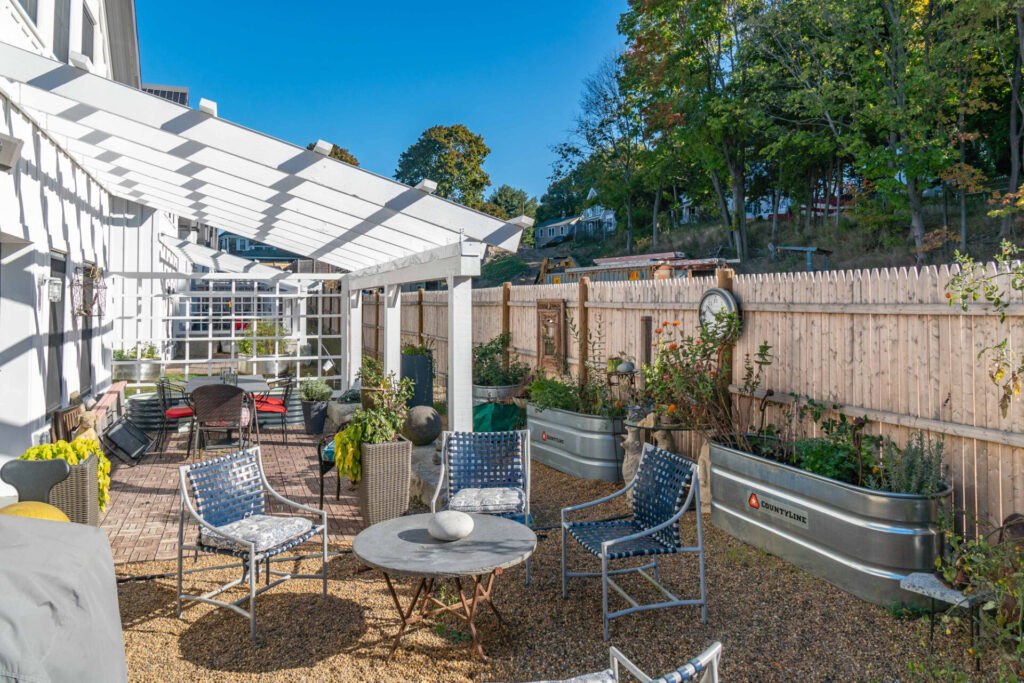
“We set out to pursue something that was new, and in line with aspirational goals, as regards the environment,” Hall says. “If you’re going to mess with a bunch of land, you’d better bring it to a place that’s really unique and does a really good job modeling urban community. We set out to create that community.”
More Than Just Shelter
Today, the property has been transformed into a quaintly appealing residential development now known as the Hillside Center for Sustainable Living, where rocking chairs sit in front of white-sided homes and neighbors exchange greetings as they pass. Behind the charm, however, is a powerful vision of how a housing development can be designed to be more than just shelter.
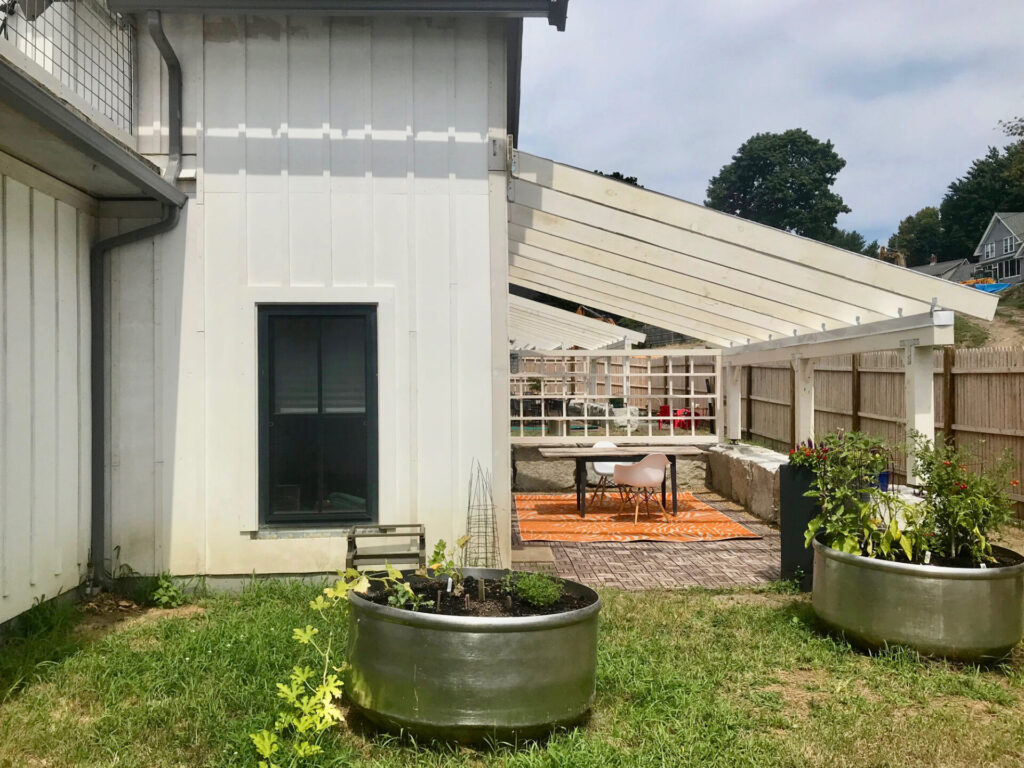

Long concerned about the impacts of climate change, Hall saw this development as a chance to make his own small impact on an issue that will continue to affect his children and their children well into the future.
“You just can’t fake the seriousness of what carbon dioxide does to our climate,” Hall says. “And if you’re going to be concerned about it, what do you do? This was our what do you do.”
From the beginning Hall and Moskow built a plan around the three pillars of housing, food, and transportation. The development, which is spread out over 4.5 acres, will include 38 market-rate, one-to three-bedroom rental units (18 have already been built). Another 10 units, developed in collaboration with the YWCA, are available for low-income renters in a building with a shared kitchen and common area.
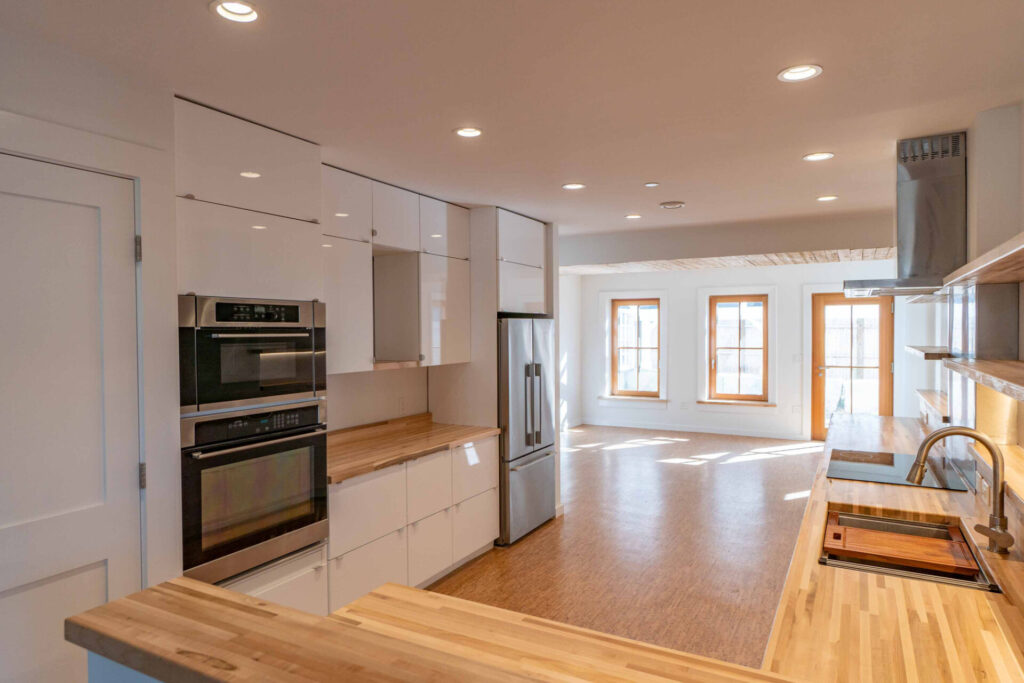
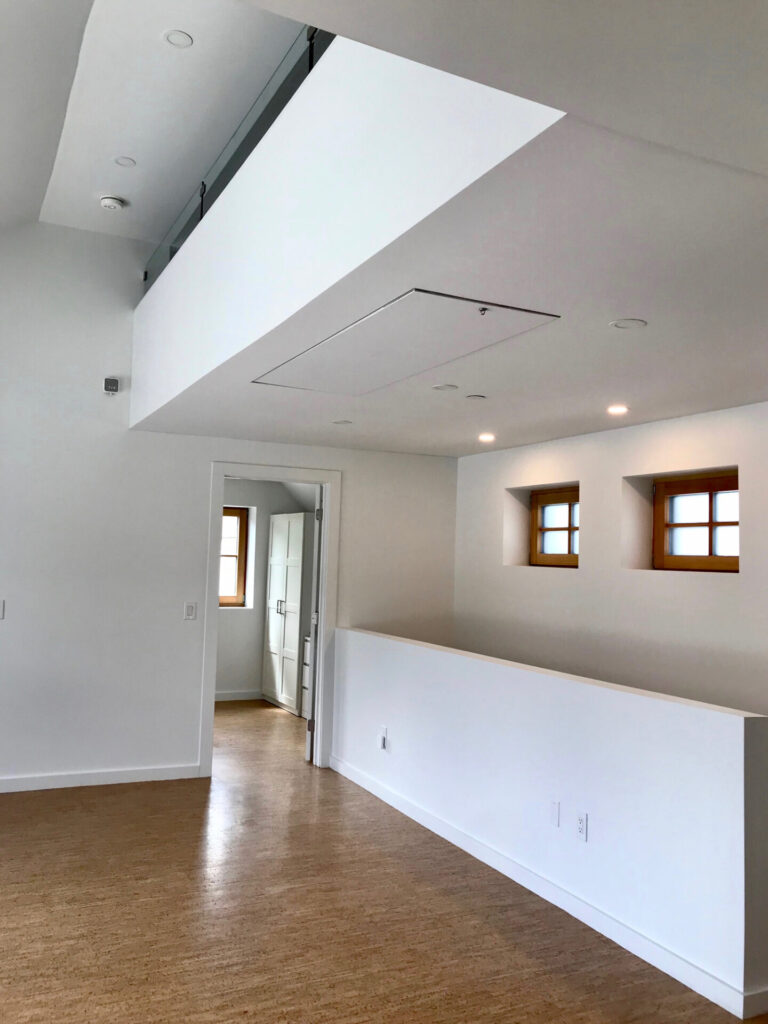
Solar panels on the roofs are designed to make the structures net-positive, generating more electricity than they use, which saves residents money while reducing planet-warming carbon emissions. The building with affordable units is being built with Hempcrete, a composite material using hemp fibers that is renewably sourced and sequesters carbon rather than releasing it into the atmosphere. Each of the highly efficient buildings is extremely well sealed to make heating and cooling more efficient, and create a quiet retreat indoors.
“Your indoor environment provides complete serenity,” Hall says.
Sustainability Beyond Housing
To bring food onto the property, the developers set aside land for an expansive garden that is now starting to grow vegetables for its first fall harvest, under the guidance of the sustainable farming director, a member of the staff. Chickens roam the property and provide colorful eggs sold to residents from a community fridge. Second-floor housing units include sizable outdoor patios with access to water so residents can do their own container gardening. The commitment to food production even extends into the landscaping, which eschews traditional landscaping species in favor of grape arbors and Asian pear trees.

“Pretty much everything you see is planted very intentionally to be something you could eat,” Hall says.
To address the climate impact of transportation, the development was built near the MBTA commuter rail and local bus service. The nearby Clipper City Rail Trail makes it easy to walk or bike into downtown Newburyport. A fleet of shared electric vehicles—charged by solar panels canopying the parking lot—is also planned.
Plans are still underway for the remaining units, but Hall can already see his dream of building a sustainable community—not just a subdivision—coming to life whenever he talks to the residents who have already moved in. “It seems as though the project has self-selected for the nicest group of people I can ever recall working with as residents. They are just lovely, lovely people and they really like living there,” Hall says. “That’s what a successful development looks like.”