

Sited on a narrow spit in the Plum Bush Downs marsh, a longtime family home now commands a striking new perspective—thanks to a modest yet transformative renovation. The symmetrical shingle-style house, perched above the water for nearly forty years, already had solid architectural bones, including an inventive attic office and cupola designed in 2015 by Philip Comeau, professor of architecture at Wentworth Institute of Technology. What it needed wasn’t reinvention but a gentle, thoughtful nudge—just enough to shift it from ordinary to extraordinary.

For years, the owners, a couple with grown children, cherished the setting but struggled with how confined the main level felt. Frequent visits from their large family made the limited entertaining space even more apparent. “This is our dream beach house, and it’s in an incredibly beautiful place,” the wife says. “But it felt claustrophobic.” They turned to architect Andrew Sidford, whose Newburyport-based firm they had admired for years. His mission: devise a minimally invasive plan with maximum visual and experiential impact.

“It was a classic case of the perception of space seeming smaller than the reality,” Sidford says. “The house had a nice view across the river, but it didn’t capitalize on the more expansive views up and down the water. And the interior felt cramped.” Achieving openness while preserving privacy required what Sidford calls “strategic sculpting”— reshaping interior volumes and placing new windows with precision.
CLASSIC CONSERVATORY
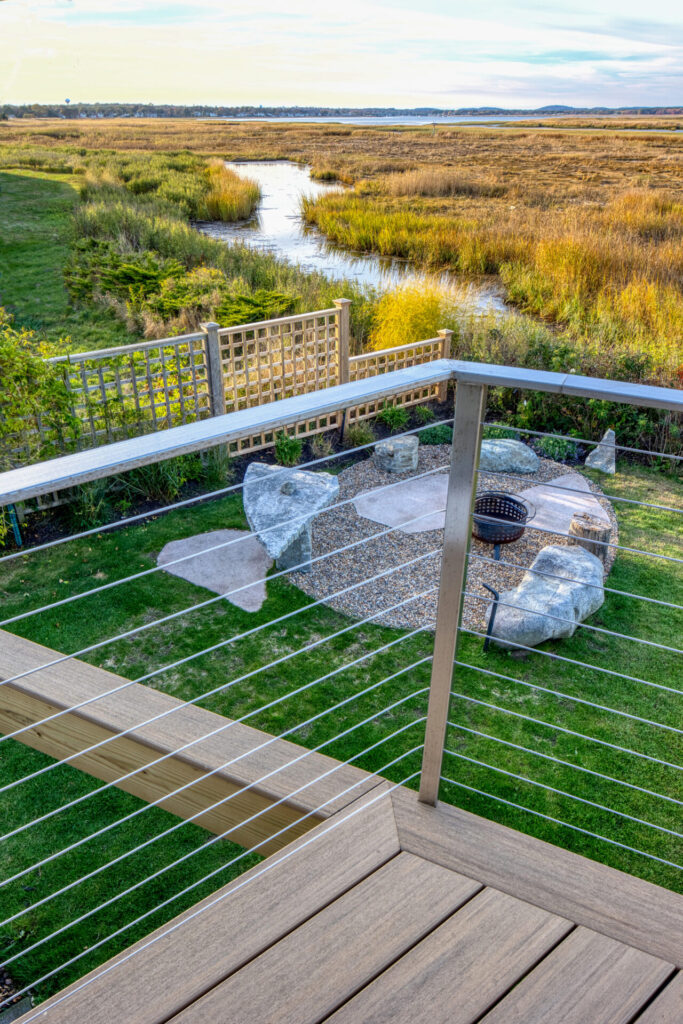
The most significant intervention centered on the back deck. Conservation restrictions prohibited new footings, so Sidford worked within the existing structure. Two-thirds of the deck is now enclosed in glass, forming a 10-by-15-foot conservatory that merges seamlessly with the living room. The effect is dramatic. The space feels exponentially larger, the views more sweeping, the connection to nature more immediate. The remaining cantilevered slice of deck ends in a prow-like point draped in a mature wisteria vine—an intimate outdoor alcove suspended above the marsh.
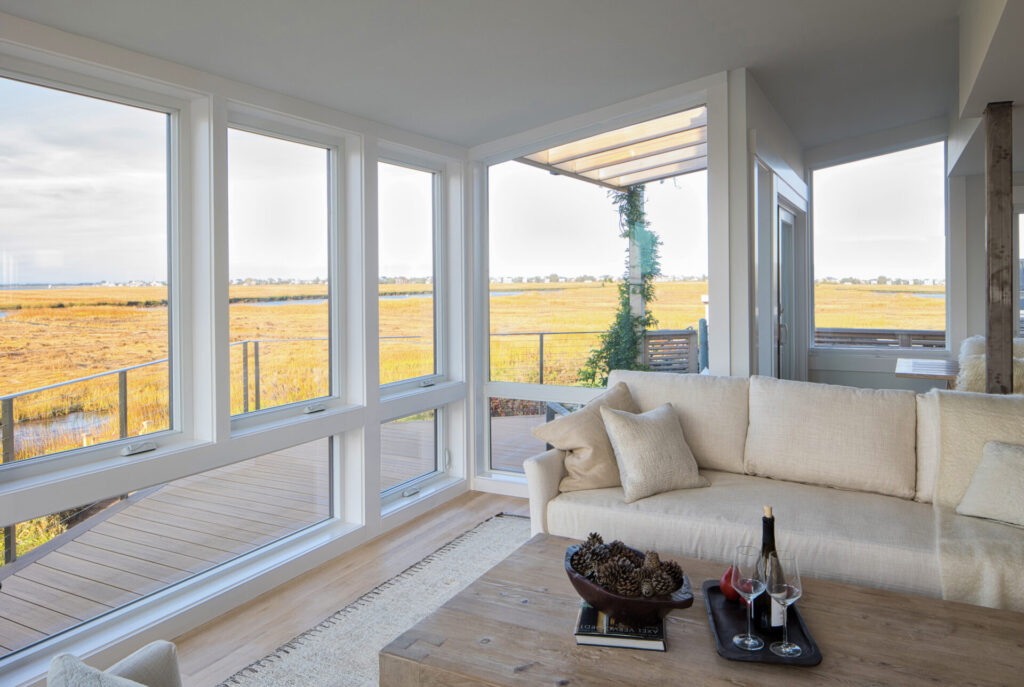
“The whole point is to be outside, sitting in nature, feeling the breeze yet still being close to home,” Sidford says. These targeted adjustments invigorated the first floor. The dining room was nudged outward to accommodate a larger table, while the living room extension introduced wide, diagonal views to the east and a wash of morning sun. Complex steel beams support the widened span, allowing even interior rooms to borrow the marsh views through the addition.
“Because you now have east-, north-, and west-facing views up the river to Newburyport, you feel like you’re out in the marsh in a climate controlled environment,” Sidford says. “In summer, it works like a screened-in porch; in winter, it’s heated and cozy.” The wife delights in the transformation. “I feel like I’m in the elements—I see the sun rise and set, I watch birds, and I can see storms coming,” she says. “It’s a house of reflections—of light, shadow, and ever-changing views.”
TREEHOUSE KITCHEN
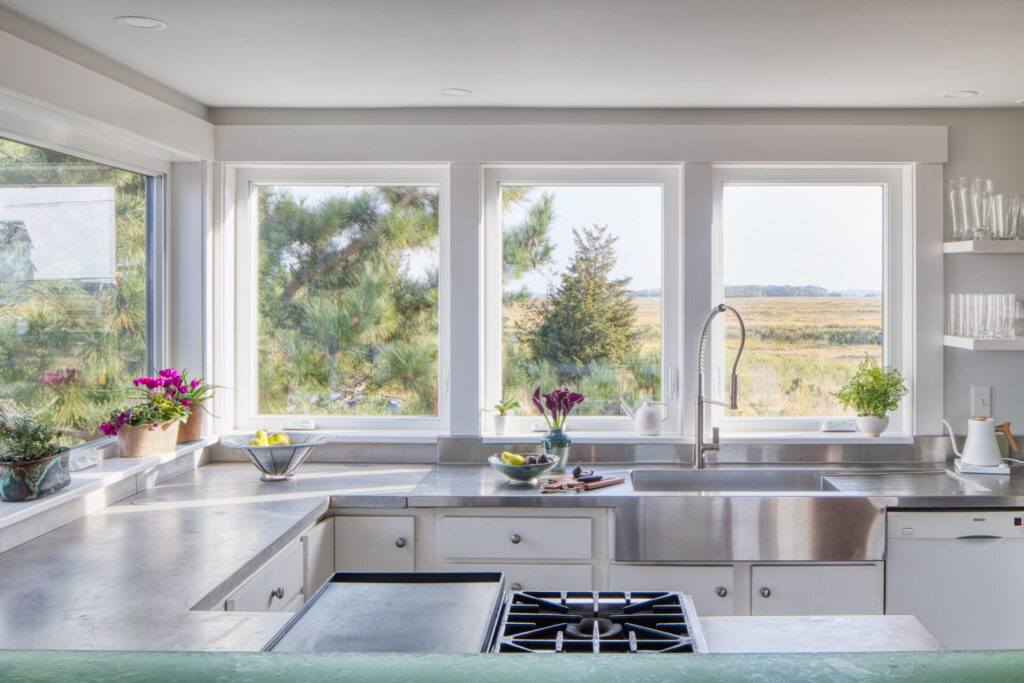
Transparency continues in the kitchen, where corner windows capture slices of sky and marsh and frame a towering Austrian pine just outside. The added light and perspective so effectively refreshed the room that a full remodel became unnecessary. “Two or three windows made the kitchen feel like a new room, even though nothing else changed,” Sidford says. The wife describes it as “a treehouse,” perched above the landscape.

VISTAS ABOVE THE WATERLINE
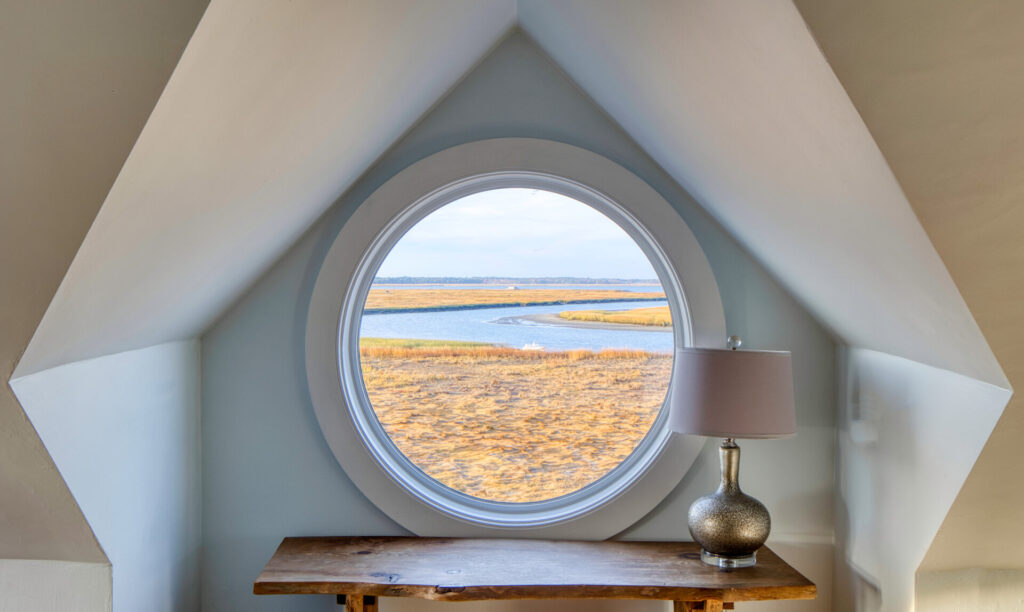
Upstairs, a circular porthole-style window replaced a bisected round one in the third-floor hallway. The new window pivots open to catch summer breezes and offers an uninterrupted view straight across the marsh—an unmistakably nautical nod that reinforces the house’s relationship to the river. “It feels like a completely different house,” the wife says. “It’s more spacious and expansive. I don’t feel the need to go on vacation anymore because I don’t want to leave it. It’s much more than a house—it’s a sanctuary.”