

Earlier this year, a 42-inch sewer force main ruptured at the City of Haverhill’s main pumping station, discharging millions of gallons of untreated wastewater into the Merrimack River. Days before the Fourth of July, North Shore beaches closed to swimming because of poor water quality, and shellfish beds were temporarily closed to harvesting. Liv Woods, executive director of the Massachusetts Oyster Project, worried first about the safety of her volunteers working in those waters. But she also knew her organization’s oyster restoration work was part of the solution.
“One of the reasons we want to plant oysters in prohibited waters is because if you get a substantial amount of oysters, you can reverse the effects of pollution,” Woods says. “Chesapeake Bay came out with research just last fall showing that the oysters they’re putting in have reached a critical mass, where they’re continuing to clean the water and make it cleaner than it is with the pollution still coming in.” “The organization was founded in 2009 as an all-volunteer grassroots effort,” Woods says, “by people who knew the benefits of oysters and wanted to get them back into Massachusetts waters.” Woods was hired as its first executive director in 2023. The project now has a paid staff of five in addition to an active volunteer network.
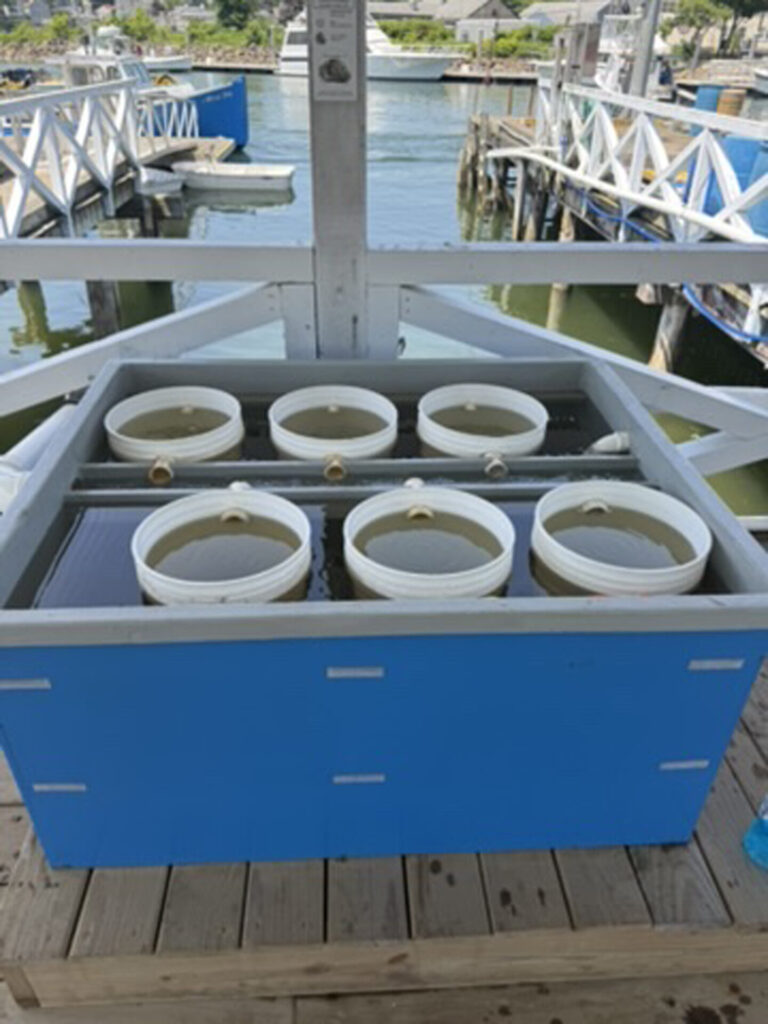
“The wild population is considered functionally extinct, which means that there are oyster reefs, naturally occur – ring, but they’re not actually maintaining and they’re not actually rebuilding to increase the population,” Woods says. “Eighty percent of oyster reefs across Massachusetts have disappeared, for a handful of different reasons including dredging, warming waters, and disease.” The project’s restoration work falls into three categories: upwellers, reef building, and shell recycling. Upwellers are incubators for baby oysters, built on public piers and boardwalks with piping that continuously draws in ocean water.
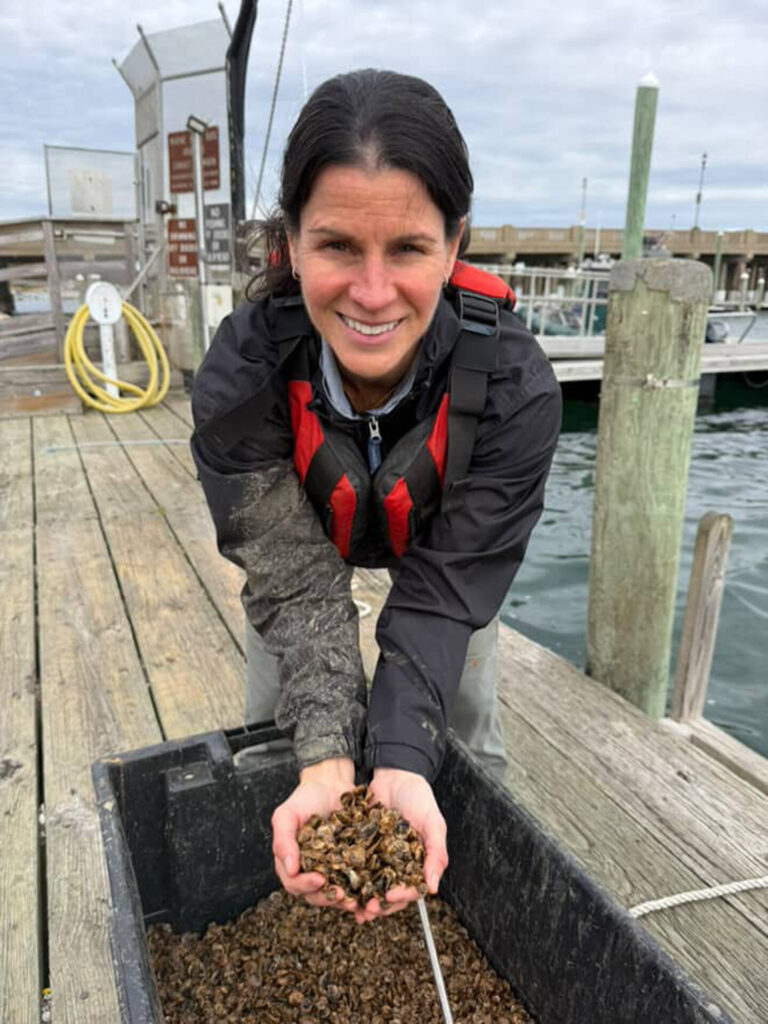
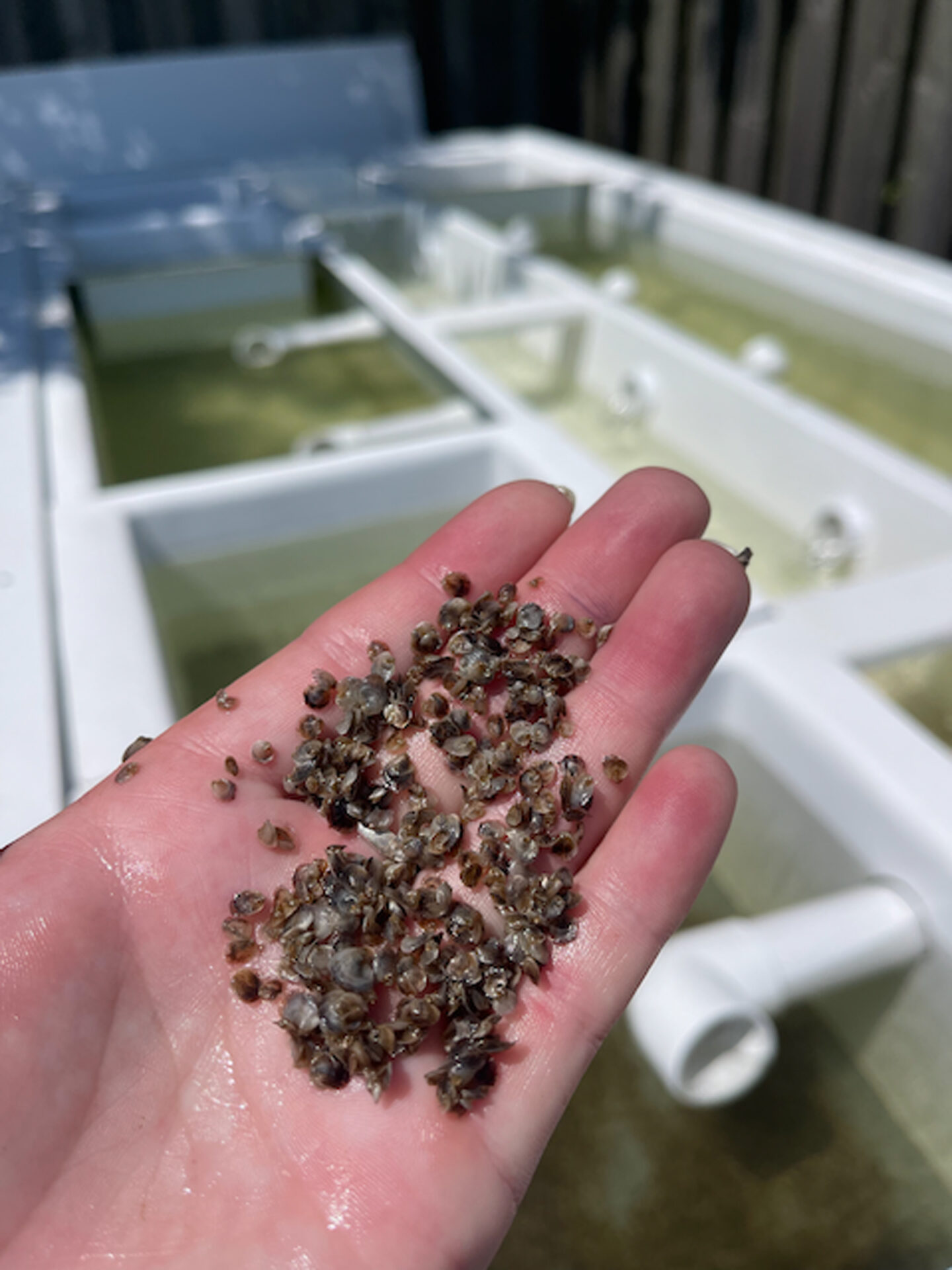
“We spend the summer growing the oysters, and one of the reasons they are put on public docks is because it’s a re – ally great community engagement tool,” Woods says. “It’s a great opportunity to have the upweller open and have folks come over and see the oysters and learn about the impact that they have on their local waters. The seed is smaller than your fingernail. We’ll grow the seed any – where from eight to 12 weeks, depending on how quickly it grows. Water temperature and the availability of food in the water determine how quickly they grow.”
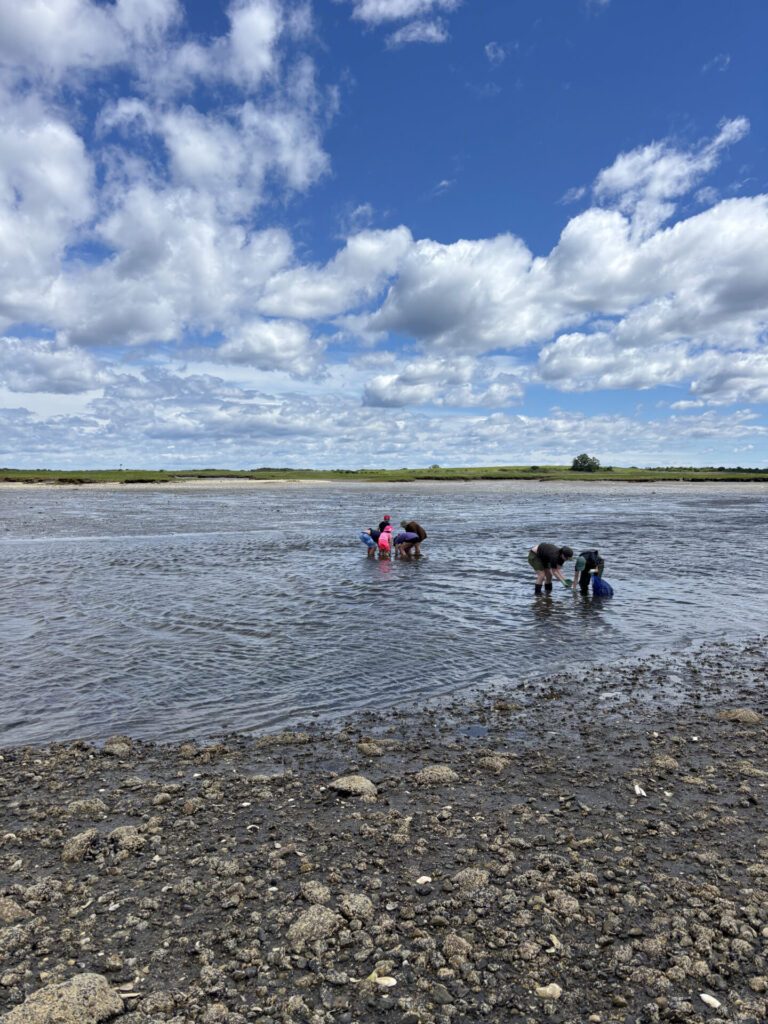
Farmed oysters raised for the table are sterile triploids, unable to reproduce. Every oyster in the Massachusetts Oyster Project’s upwellers is a diploid, capable of reproducing, and is grown solely for reef restoration. Five upweller projects are running on the North Shore this year: Newburyport, near the harbormaster’s building; Manchester-by-the-Sea, on Morss Pier; Marblehead, on Tucker’s Wharf; and two in Gloucester, including the flagship upweller, launched in 2017 in partnership with Maritime Gloucester on that organization’s newly renovated main pier downtown. Additional sites operate on Cape Cod and Nantucket. The North Shore has one active restoration site, in Ipswich off Plum Island, where there is historical evidence of oyster growth. Every oyster raised at the five North Shore upwellers is deposited there. Two other restoration sites receive oysters grown on Cape Cod and Nantucket.

“We call oysters ecosystem engineers and ecological powerhouses,” says Kelsey Schultz, PhD, restoration program manager at the Massachusetts Oyster Project and an associate research scientist at Northeastern University Marine Science Center. “Oysters can do all these crazy things that just naturally benefit humans. They build these huge reefs, so they reduce wave energy and stabilize shorelines. They provide water quality filtration because they’re constantly filtering water, and they’re removing excess algae, resulting in improved water quality. That helps other species like seagrasses, because seagrasses need light, and the cleaner the water is the better seagrasses can grow. They also serve directly as habitat for other species. Striped bass and black sea bass use oyster reefs as nursery habitat, and as a foraging ground. Bigger fish are eating those babies, but the reef still provides enough protection that these little fish can grow big. So it’s benefiting our fisheries as well. There’s this ever-expanding concentric circle — oysters provide all these things for us just by existing.”
The final piece of the puzzle is the project’s Oyster Shell Recycling program, which since 2021 has partnered with restaurants across Cape Cod and the South Shore to divert used shells from the ordinary waste stream. The cured shell, known as cultch, is then laid down at restoration sites. Shell is an ideal substrate for rebuilding reefs: baby oysters, called spat, attach to it and stay put for the rest of their lives. With a goal of recycling 100,000 pounds of shell a year by 2028, the project is actively expanding the effort to the North Shore. “We have some restaurants who are interested, and we are currently looking for a site to collect and age our shell,” Woods says. On the advocacy side, the Massachusetts Oyster Project is working on state legislation that would offer a tax credit to restaurants that participate in shell recycling. The organization also runs an education program on the value and importance of wild oysters and balanced aquaculture, and is looking for individual volunteers as well as corporate and restaurant partners.