
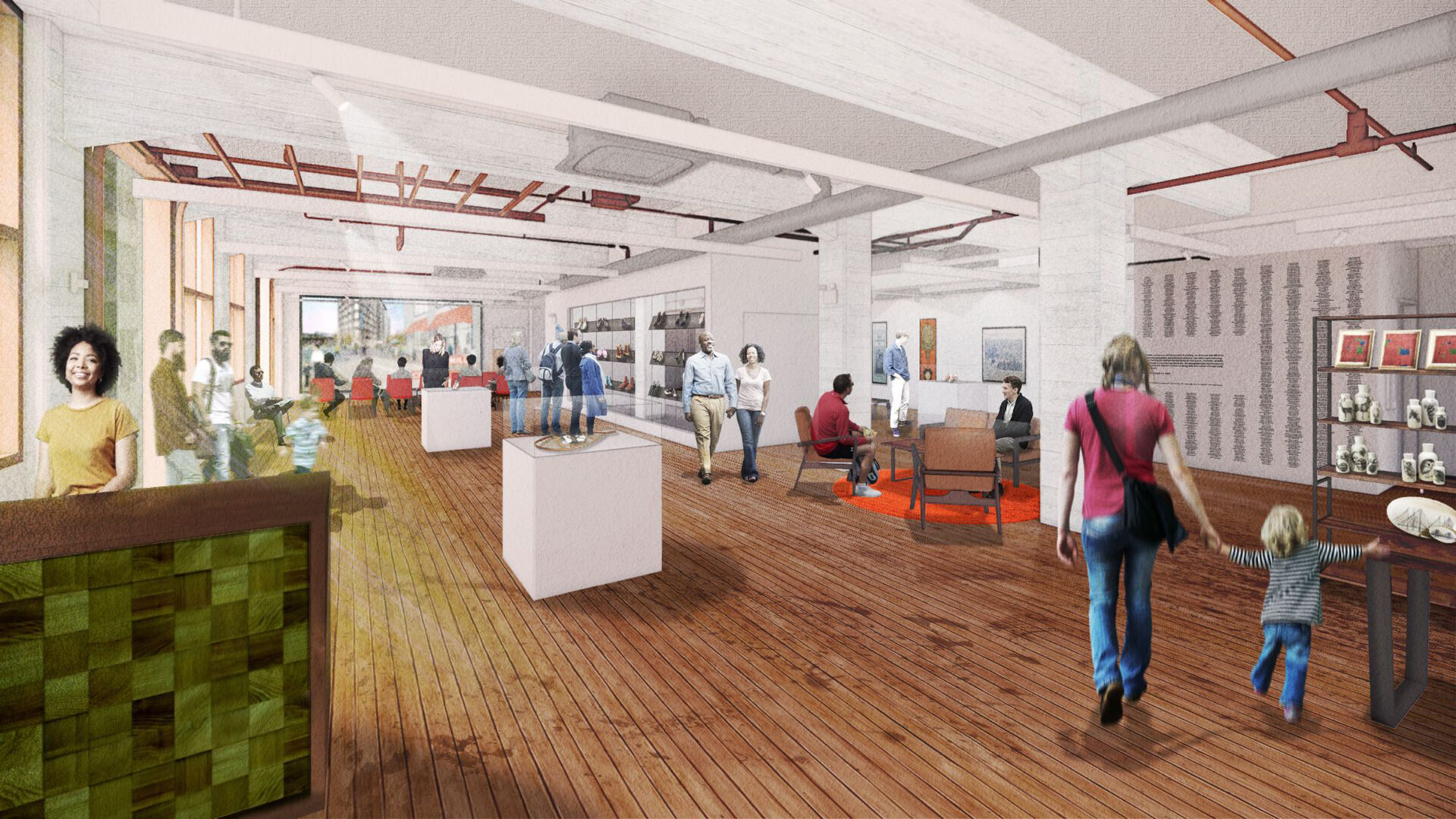
For years, Historic New England has quietly housed its incredible collection of more than 125,000 historic objects and artifacts and upwards of 1.5 million archival documents in a historic former shoe factory in downtown Haverhill. Those items have been carefully preserved but tucked away from public view, leaving Historic New England primarily known for its historic homes and house museums.
That will change this summer with the opening of Historic New England’s new Welcome and Exhibition Center, located on the ground floor of the Burgess Building, an antique shoe factory on Essex Street. Historic New England will mark the occasion with an opening celebration and ribbon cutting on Saturday, June 27.

The welcome center’s opening is the first phase of an ambitious, multiyear, $150–$200 million project that promises to bring Historic New England’s vast collection to light while transforming a formerly downtrodden city block into a full-fledged cultural hub.
“We are the oldest, largest, most comprehensive preservation organization in the United States,” says Carissa Demore, vice president and chief policy director for Historic New England. “We also have the world’s largest concentration of artifacts and archival documents that tell the story of New England history, the majority of which are stored right there in those shoe factories.”
The completed project, dubbed the Historic New England Center for Preservation and Collections, eventually will stretch across three acres of historic buildings and vacant property and may also include housing, retail, a hotel, a theater, public green space, and spaces for artists and makers.

“It’s a space that’s meant to be a precursor to the entire large project that we’re envisioning, creating and really turning our facility inside out, creating a living archive, and bringing the public into conversation around what the history in those buildings means and can inspire in the future,” Demore says.
The 12,000-square-foot Welcome and Exhibition Center will blend the region’s industrial past with a forward looking future. Even the building itself will be part of the story by showcasing its original poured concrete construction, which was a crucial design feature when it was built in the wake of a devastating fire known as “the Great Conflagration,” which destroyed many of Haverhill’s factories in 1882.
“We’ve also preserved the historic floor, so you’ll be able to stand on the floor where shoes and shoe parts were produced,” Demore says. Those historic details will live alongside modern features, like handicap accessibility and contemporary technology like a large-scale video wall.
“We have some really fantastic, flexible space because it’s such a large area where we can do a lot of different types of programs,” Demore says. “We can do things that are unexpected and really matching the scale and innovation of our overall vision for this project.”
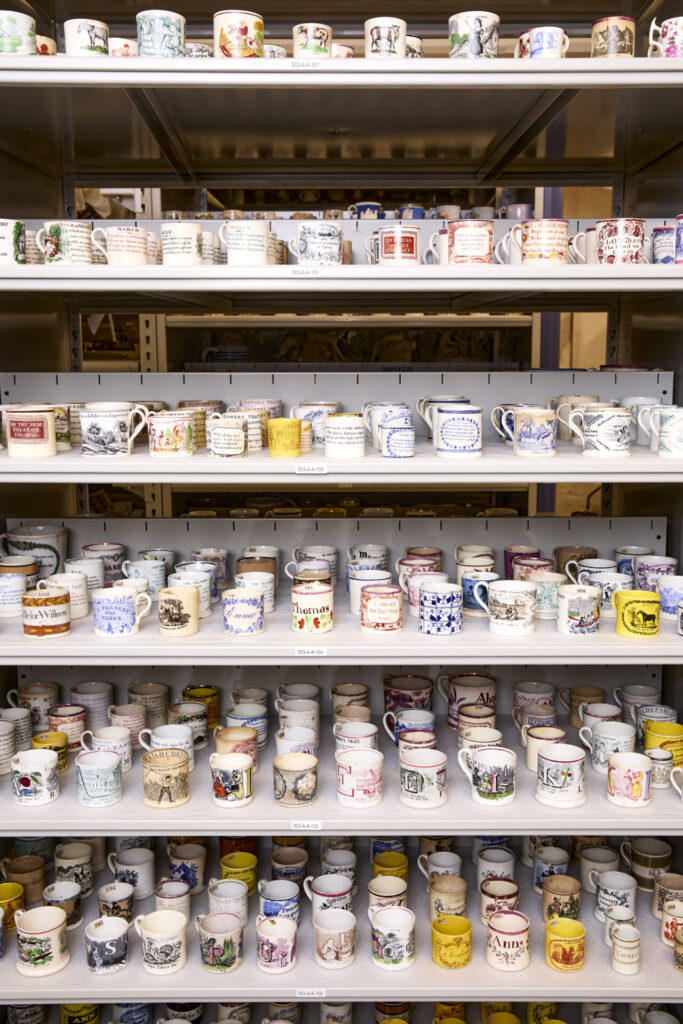

The new Welcome and Exhibition Center’s opening exhibition, Shoe Stories: Past, Present, Future, will honor Haverhill’s legacy as a shoe manufacturing powerhouse, which was known as the “Queen Slipper City” and which produced one-tenth of all the shoes in the United States by 1913.
The exhibition will feature some of the 127 pairs of shoes donated by famed shoe designer Stuart Weitzman, who apprenticed under his father, shoemaker Seymour Weitzman, at his eponymous Haverhill shoe company, Mr. Seymour. Shoes produced in that Haverhill factory are among the collection. The Shoe Stories exhibition will also include archival materials from Historic New England’s collection, like vintage shoe advertising; examples of shoes from contemporary designers; and video programming.
It’s all part of a plan that aims to reimagine what historic preservation means and looks like. “We laid out, from the beginning with this project, a very ambitious idea of what preservation and culture can do as tools for revitalization, for communities, for the region, and beyond. And that continues to be the goal and the purpose of what we’re doing in Haverhill,” Demore says.