For Valbona Lavdari, purchasing a home in Haverhill from Habitat for Humanity 20 years ago was about more than simply getting a place to live. It jump-started the rest of her family’s life. Lavdari and her husband, Leonard Ndrecka, moved to the United States in 1999 from their native Albania by way of Greece in search of better economic opportunities. They found that and more with Habitat for Humanity.
“It was much more than having a house with zero down payment,” Lavdari says. “It helped us so much to progress in our lives and in our ambitions.”


Lavdari and Ndrecka are far from alone. Essex County Habitat for Humanity serves all 34 cities and towns in Essex County and has built 129 homes and rehabbed or repaired 67 more. Now, the organization is celebrating its 40th anniversary at its Building Dreams Gala 2025 on Thursday, October 16, at the Ipswich Country Club.


Accessible homeownership
When most people think about Habitat for Humanity, they think of President Jimmy Carter and fleets of volunteer homebuilders.
“Habitat today is a lot more than that,” says Meegan O’Neil, Essex County Habitat for Humanity’s executive director. “We are an affordable housing organization, but the thing that makes us different is we are focused on affordable home ownership.”
Habitat for Humanity provides people with a chance to purchase starter homes at prices that don’t typically exist in the market today.

“The people that are buying our homes—a college professor, a school nurse, an insurance agent—these are people with good, stable jobs who, 30 years ago, could have bought a starter home like this,” O’Neil says. “But today, Habitat is the only way that they have the opportunity to buy a home like this in Essex County.”
Habitat reviews prospective homeowners’ income, credit, and their need for housing, as well as their willingness to provide the required “sweat equity” to help build or rehab their own home.
“Our homebuyers are really invested in their homes because they helped to build the homes that they’re going to live in,” O’Neil says. “They are gaining skills, as well as really investing their time in creating that opportunity.”

Once approved, homeowners will put down a 3 percent down payment for a 30-year fixed-rate mortgage. The homes are deed restricted to ensure that they “stay affordable to families in the same income range in perpetuity,” O’Neil says.
Homeownership provides not only long-term stability, but also the opportunity to build wealth.
“We had a homeowner who just sold her home after being in it for eight years. And even with the deed restriction, the value of her home increased $50,000,” O’Neil says. “Her family wouldn’t have had that opportunity to build wealth if she were renting over that period of time.”
It also allows people to improve their lives in other ways, rather than spending a disproportionate percentage of their income on housing. For instance, Lavdari earned a bachelor’s degree, became a real estate agent, and volunteers in the community. Ndrecka became a licensed contractor and started his own business. They also raised two children in their home.


40 Years of Community
A lot has changed at Habitat for Humanity of Essex County over the past 40 years, including the organization itself, which is the result of several mergers, most recently between North Shore and Merrimack Valley organizations.
Another major change—and the biggest challenge—is acquiring land. Land on the North Shore is expensive and in short supply. That’s why Habitat works with cities and towns, local affordable housing trusts, nonprofits, and even individuals to acquire land in communities with a variety of median incomes. It’s working on current and future projects in Hamilton, Haverhill, Gloucester, Ipswich, Wenham, and Salem.

“That opportunity for families to own a home in the community of their choice is really important, for them to attend the school of their choice, and for young families to be able to stay in the towns that they grew up in,” O’Neil says.

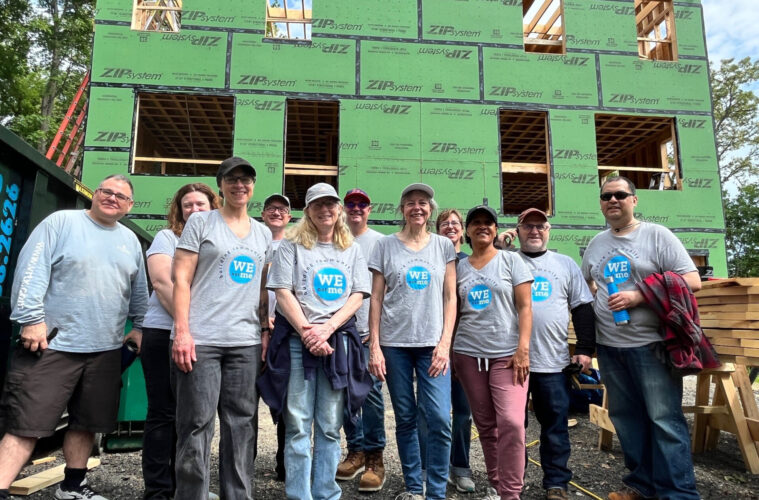
One thing that hasn’t changed, though, are the people and organizations who donate money and time to the organization, such as Cedar’s Foods, which recently donated $100,000 to support the creation of seven affordable homes in Haverhill, as well as the volunteer builders that Habitat is known for.

“I’m very interested in access to home ownership for those who can’t afford it,” says Diane McClintock, a Habitat board member and volunteer whose company, North Andover–based Watts Water Technologies, is also a key Habitat sponsor. “We are an annual sponsor and we also have volunteers. We’ll do volunteer days where we bring folks from Watts and work onsite.”


It’s all part of Habitat’s belief that partnership, collaboration, and community investment is crucial for ensuring affordable housing for everyone. “This really is people working together collectively to create this opportunity for home ownership,” O’Neil says.

