

On October 31, when kids were trick-or-treating throughout the North Shore, the region’s food pantries were facing an emergency. Within hours, SNAP benefits for millions of people across the country would go dry, and already, food pantries were feeling the effects. “We had some of our largest days and our largest mobile sites that we’ve ever had, and that’s all in anticipation of what’s going to happen,” says Robyn Burns, executive director of The Salem Pantry.
Food insecurity is high and growing, requiring hunger relief organizations’ food storage and distribution systems to be as robust and efficient as possible. That’s why The Greater Boston Food Bank has awarded a $2 million grant to The Salem Pantry to lease a 20,000-square-foot warehouse in Salem near the Lynn and Peabody borders.
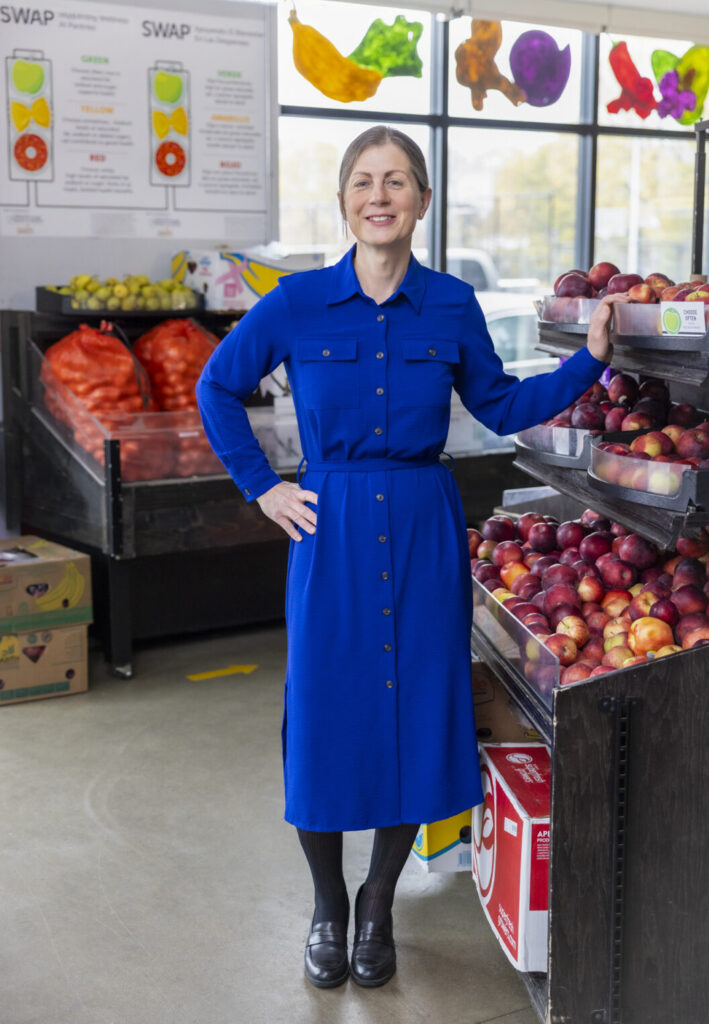
The warehouse will increase The Salem Pantry’s food storage capacity five-fold, while providing warehouse space, cold storage, freezer space, and a distribution infrastructure for up to 20 additional emergency food distribution partners in lower Essex County. It will also reduce driving time for local food pantry trucks, which won’t need to go into Boston to pick up food from The Greater Boston Food Bank.
“It’s a hub and spoke model, where the food will come up to Salem, we will receive it, centralize it, and then work with all the partners more adjacent to us to make sure that they have food for their programs,” Burns says.

Building a Strong Network
The latest Salem grant is part of a larger effort by the Greater Boston Food Bank to create regional hubs to streamline food distribution, since every year, Greater Boston Food Bank distributes more than 100 million pounds of fresh, healthy food to 600 food pantries and other partners throughout 190 cities and towns in Eastern Massachusetts.
“We need to develop a stronger distribution system network that can help us get food out in an optimal, more efficient manner,” says Cheryl Schondek, chief operating officer at The Greater Boston Food Bank.
Among those hubs is the Seacoast Regional Food Hub in Salisbury, which serves Greater Boston Food Bank partners in the Lower Merrimack Valley and northern Essex County. The new Salem warehouse will complement that work, and its location near the Lynn and Peabody borders is strategic.
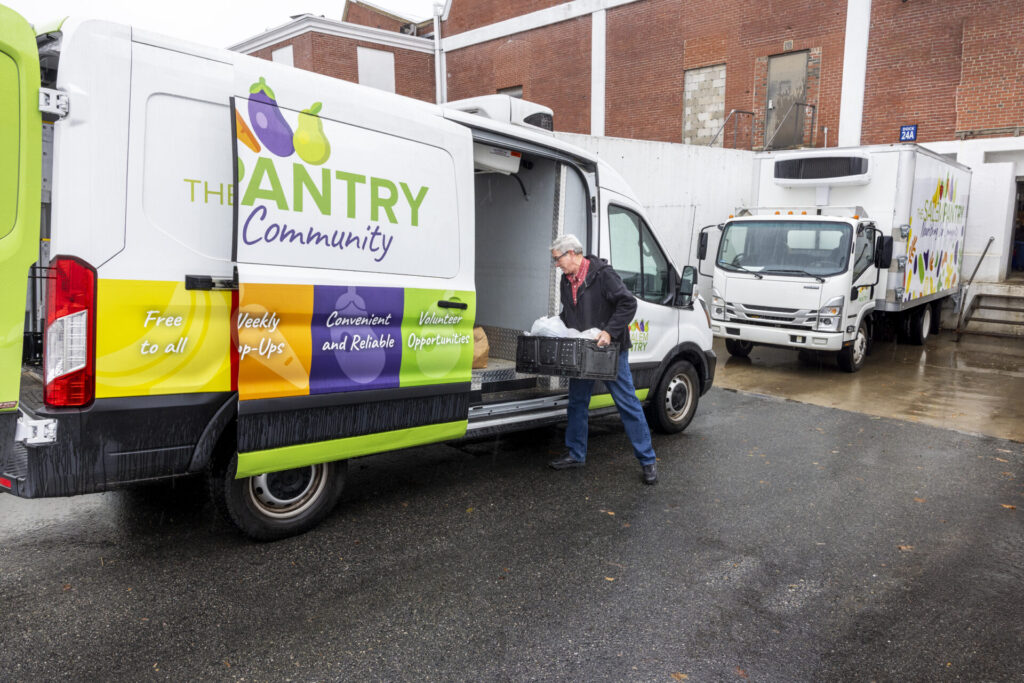
“They are going to be able to create this efficient model so that clients that would normally be coming to Boston to get their food can now stay within Salem,” Schondek says.
Having additional cold and freezer storage at the new Salem warehouse will also be critically important, not only for planned storage but also for unplanned storage. If a donor helps them get an extra truckload of eggs, for instance, they’ll have a place to store and distribute them from.
“It will allow us to take advantage of opportunity buys, of spot buys, of spot donations and quickly turn that product around to get it into the hands of those in need,” Schondek says.

An Ongoing Need
In addition to receiving the $2 million Greater Boston Food Bank grant, The Salem Pantry is also launching a fundraising campaign to continue to meet the demand for food assistance, which is increasing in the region every year. In 2024, The Salem Pantry served more than 31,500 individuals, including one in five Salem households, more than 16,700 Lynn residents, and households from every community across southern Essex County. That’s up 8 percent from the year before, but still isn’t enough.
The southern Essex County region is far from alone. Approximately 2 million adults in Massachusetts, or more than one in three residents, faced food insecurity in 2024, and 24 percent faced very low food security, found a Greater Boston Food Bank report.

SNAP and other cuts only exacerbate that need. More than 1.1 million Massachusetts residents use SNAP benefits, including 32 percent who are children, 26 percent who are seniors, and 31 percent who are people with disabilities, according to Boston.gov.
“The food bank and food pantry system was really set up to be an emergency food system,” Burns says. “When you have a reality where people are coming in more of a regular fashion and it’s more of a chronic need in the community, it starts to push the limits of how much food is available to distribute and how organizations can meet that need.”

Despite the challenges, The Greater Boston Food Bank and The Salem Pantry are committed to not only hunger relief, but also providing food that’s fresh, healthy, and distributed in a dignified way, from medically tailored food boxes for people with chronic health conditions, to The Salem Pantry’s market, which operates and feels like a typical grocery store and has no income or residential requirements to attend.
Having a “durable network” of partners is critical to that mission, Schondek says. “We all have a mantra about distributing food with dignity and respect,” she says. “And that is not only to the client, but that is also to the 600 partners that we are working with.”
North Shore Food Pantries
Our Neighbor’s Table, Amesbury
Beverly Bootstraps, Beverly
Haven From Hunger, Peabody
The Open Door, Gloucester
Bread & Roses, Lawrence
The Salem Pantry, Salem