

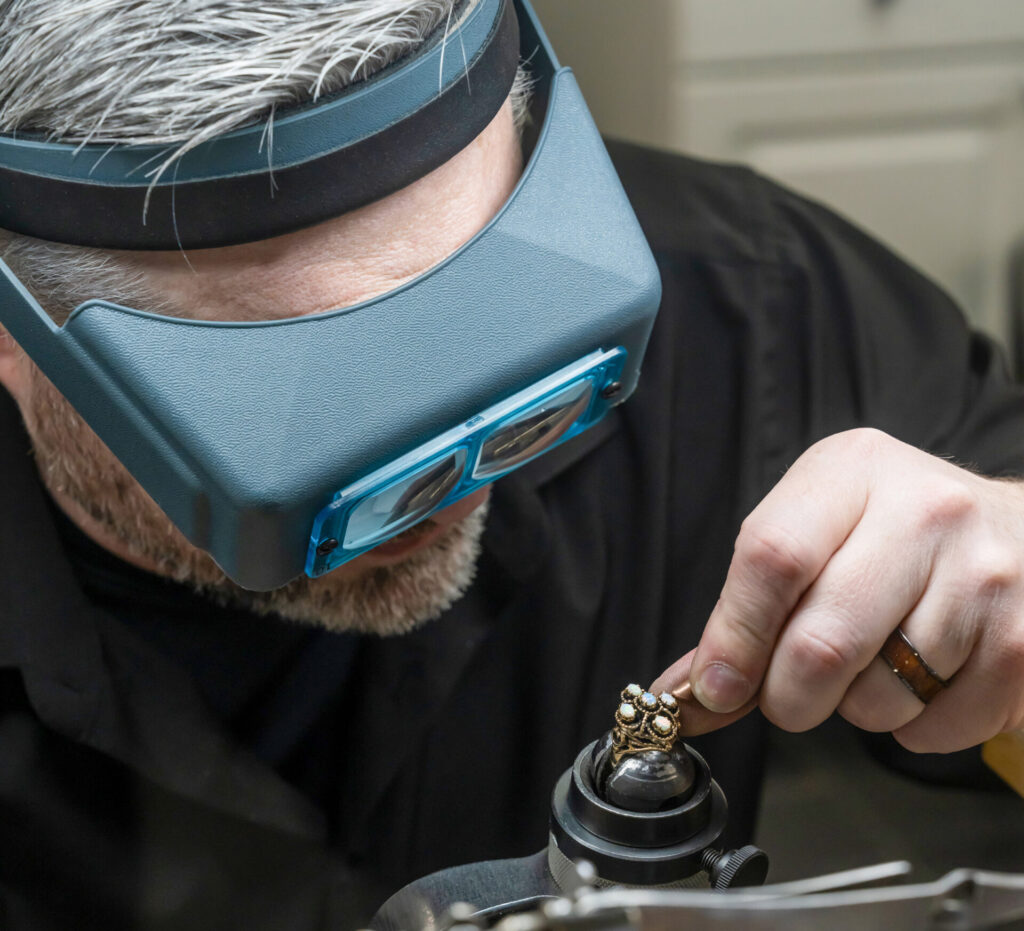
Opals can be notoriously finicky stones to work with. So when a damaged opal ring arrived on Nate Swisher’s jewelry bench, he knew repairing it would be a delicate process, from finding the right stones to replace the broken ones to handling the new stones with careful precision. “Opals are really tricky to match the color, the fire,” says Swisher, a master jeweler at Royal Jewelers in Andover. “And opals are very fragile.” It takes a practiced eye and sure hand to accomplish this kind of start-to-finish jewelry repair and fabrication.
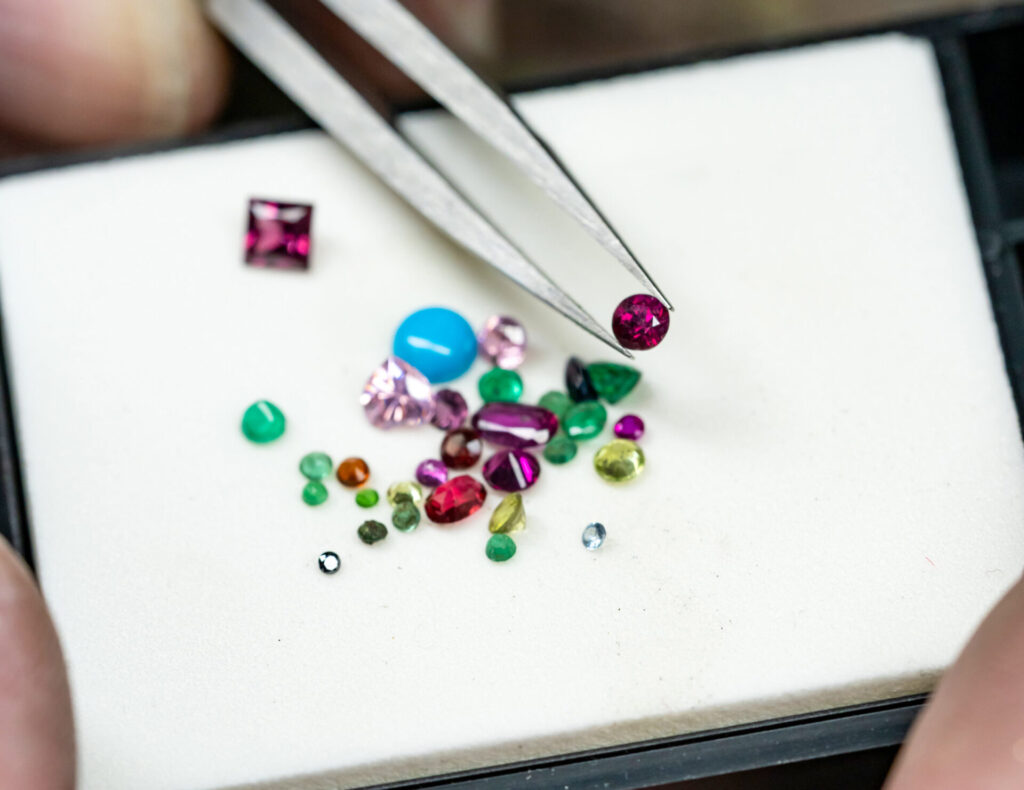
“Our artisans, our jewelers, are very sensitive to what it takes to reconstruct and to make these rings look brand new today, even though they may be 75 to 100-plus years old,” says Royal Jewelers CEO Steven Leed. “It’s really very tactile. It’s the touch, the feel, and all its hand craftsmanship.”

Yet fewer and fewer people have this kind of knowledge and skill. “It is a dwindling art. You’re not seeing as many jewelers as you would even 20 years ago,” says Josh Shevitz, vice president of operations at Royal Jewelers. That’s not only an anecdotal observation. The industry group Jewelers Mutual points to a workforce study showing that more than 70 percent of jewelers plan to hire bench jewelers and struggle to find qualified candidates. Additionally, jeweler retirement outpaces new talent. One reason for that, especially in the United States, is the lack of generational tradition.
“This country doesn’t have a long lineage of jewelers as a family art,” Shevitz says. “In Italy and in Europe, their grandfather did it, their great grandfather did it, their father did it, and then therefore they’ve done it. And it just was a constant flow and evolution of jewelers.” Yet the demand for jewelers’ skills is stronger than ever before, with Leed noting that more and more people are opting to repair their jewelry, rather than replace it. That could be anything from a broken chain to a stone that’s fallen out; a ring that no longer fits; or even reimagining inherited vintage pieces.
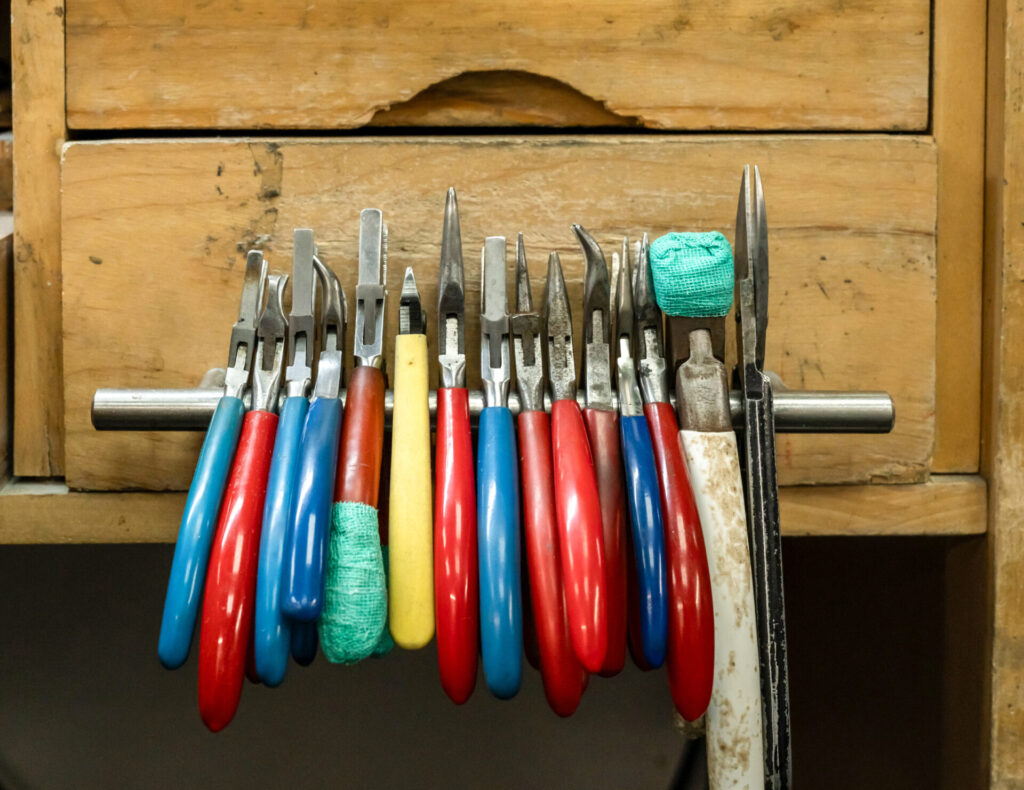
“We have at least 2,500 people come in here in the course of a year with a problem with their jewelry,” Leed says. “We had someone two weeks ago who came in with a bracelet that we turned into earrings.” At Royal Jewelers, that work happens right onsite. Tucked away downstairs from the glittery, 5,000-square-foot showroom in downtown Andover, the master jewelers are hard at work, using an array of tools and skills ranging from the most traditional hammers and files to cutting-edge laser machines.
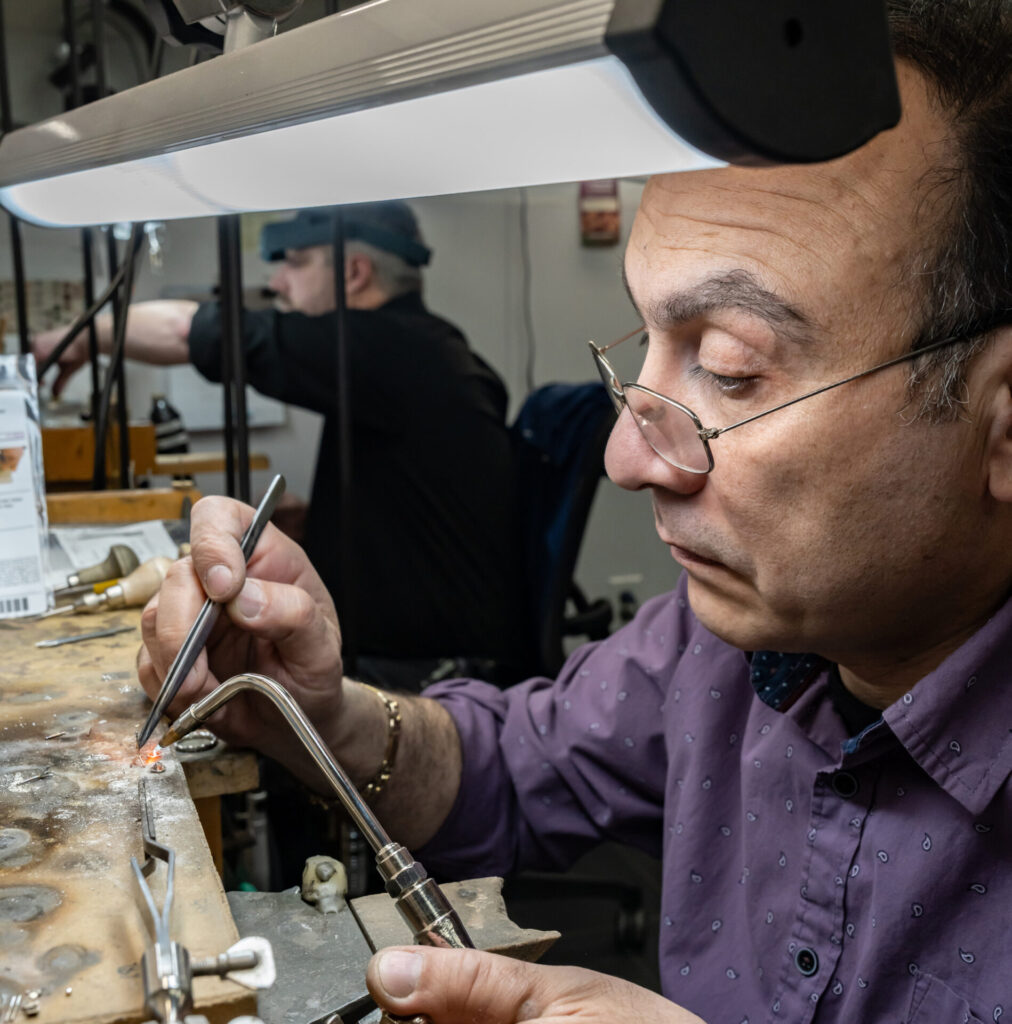

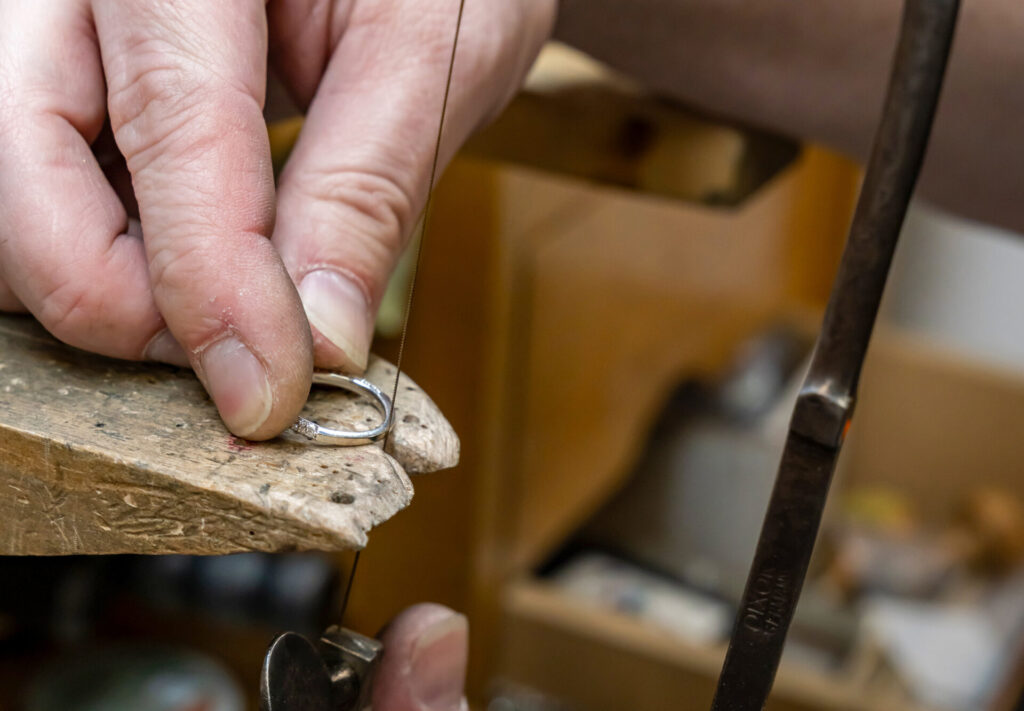
One snowy Friday morning found Swisher at work repairing the opal ring while master jeweler Vahram Vehapety – an, who trained under a master jeweler in Boston and has been in the industry for nearly 30 years, carefully resized a 14-karat yellow gold signet ring. The tactile process not only requires knowledge and skill of a technical craft. It’s also infused with the personal stories and deep sentimentality that jewelry often holds. “It’s happy work,” says Hampo Santourian, a jeweler who recently retired from the business after working for Royal Jewelers for many years. “It’s engagements, birthdays. Setting diamonds was my favorite thing.”


Swisher agrees, saying he couldn’t imagine doing the job without thinking of the people who the pieces belong to. He adds that their work isn’t about how fast they can move pieces out the door. “We’re putting our time and care into these pieces,” he says. “We want to make sure they can continue to be worn and enjoyed.” After many decades in the industry, Vehapetyan echoes the idea that fewer people are becoming jewelers. “Not many young people are interested,” he says.


However, there are efforts to combat that trend. Earlier this year, Jewelers Mutual entered into a $10 million, 10-year partnership with the Savannah College of Art and Design to support bench jeweler education. Royal Jewelers is also considering ways to educate and boost the pipeline of new jewelers. “We’re trying to figure out how can we help reinvigorate the industry of new, young jewelers that want to learn this,” Shevitz says. “We want to be proactive and find solutions before it becomes more of a problem.”