
A century ago, the virtuoso Russian pianist and composer Sergei Rachmaninoff extolled the virtues of his preferred piano. “I desired to play Mason & Hamlin pianos because I believe they would be the most satisfactory to me in my work,” he said. “In my opinion, these instruments must satisfy all musicians and artists of first rank, as well as music lovers in general. I feel that if I have succeeded in making even the slightest impression upon the public by my playing, a great part of my success is due to your instruments.”

Today, Mason & Hamlin is still making incredible pianos favored by musicians the world over, and they’re doing it right from their flagship factory in downtown Haverhill. It’s a fitting location for the company, which was founded in Boston in 1854 and moved to its current location in a former shoe factory in 1986.
“Haverhill was a place where they had a lot of craftsmen,” says Nathan Mabanglo-Burgett, Mason & Hamlin’s creative director. “This used to be a shoe mill and there’s a history of building quality things.” Today, that commitment to quality and craftsmanship is at the center of everything Mason & Hamlin does.


“What really separates us is the sound we’re trying to craft and also the longevity and performance of the instrument,” Mabanglo-Burgett says. Mason & Hamlin pianos produce what the company refers to as “the American sound.” “It’s very rich. It’s lush. It’s got incredible resonance to it, but it also can stand the test of time,” Mabanglo-Burgett says. “It’s built to endure, and you pass that from generation to generation. Everything we’re doing in our piano is with that mindset.”

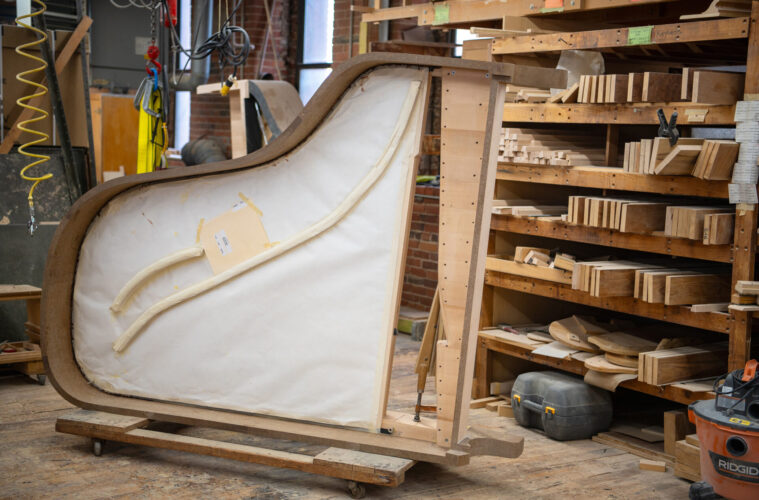
The factory encompasses the entire six-floor building, where roughly 30 craftspeople produce between 80 and 100 pianos per year. The pianos range in size from uprights to huge concert grands. At the pinnacle of those instruments is the Virtuoso X Series, which has a hard rock maple rim that’s important for both sound and durability. “That goes back to our philosophy. The sturdier the rim is, the better the structure,” Mabanglo-Burgett says. “The more material in it that’s very dense is going to help reflect sound back onto the soundboard, creating this amazing projection and resonance out of the instrument.”
The soundboard is another key element of the piano. Mason & Hamlin soundboards are made from dried and aged quarter-sawn eastern white spruce. “It’s the heart of the instrument,” Mabanglo-Burgett says. “The soundboard is really the speaker of the piano.” Each floor of Mason & Hamlin’s factory is dedicated to a different part of the building process, The first-floor woodworking shop is where raw materials are crafted into different elements of the piano’s structure.


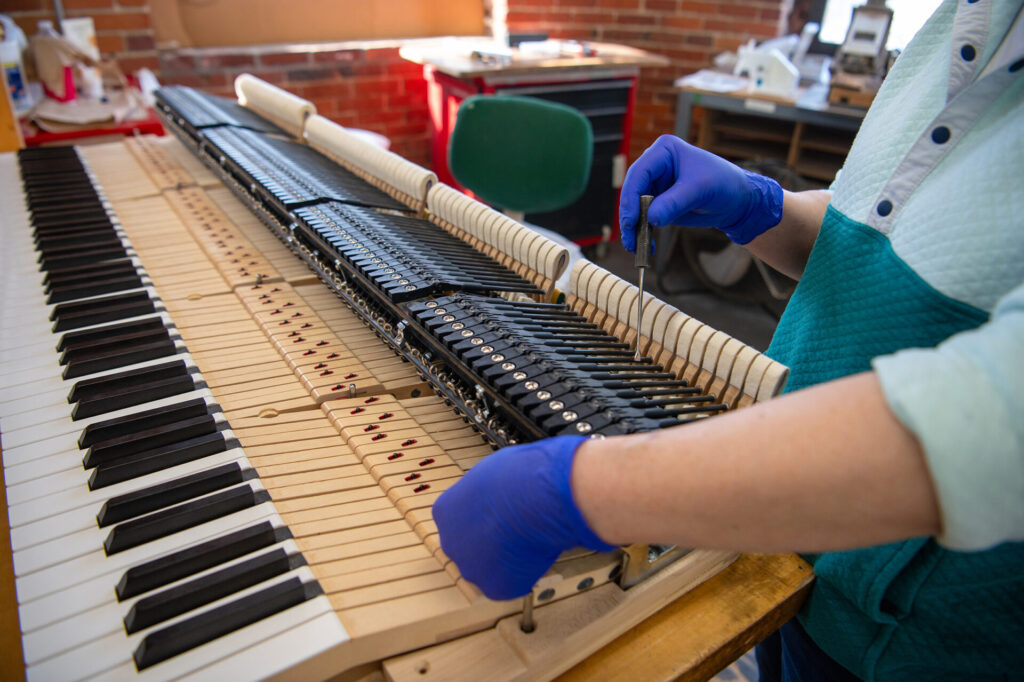
On the second and third floors, the pieces are assembled and the soundboard is installed. The piano action is installed with precise mechanism work on the fourth floor. In the fifth floor finishing department, craftspeople sand the pianos by hand and add high gloss finishes. The building is crowned with a sixth-floor showroom.

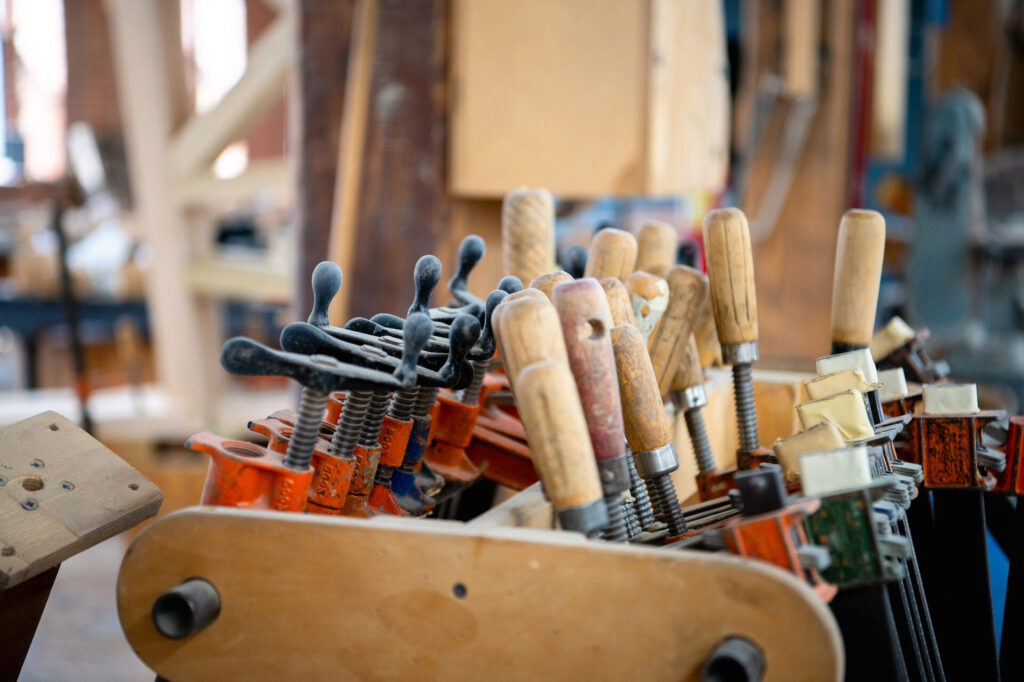
Visitors to the factory can get a glimpse into each of these areas and get a firsthand look at how these incredible instruments are made during scheduled tours. (Tours are not handicapped accessible). “You’ll see how the piano is built from start to finish,” Mabanglo-Burgett says. “It brings you back to over 100 years ago. You see old machinery, old hand tools, old techniques.


You get to see the whole process being done, and at the end of it, you get to try out the pianos.” Innovation is also a key element of Mason & Hamlin’s “spirit and DNA,” Mabanglo-Burgett says. For instance, Mason & Hamlin’s exclusive “crown retention system” was developed in 1900 and is still used today to permanently preserve the piano’s carefully crafted structure, allowing the instrument to keep its original power and tone throughout its life.


“We are the only piano that can last this long because of this device,” Mabanglo-Burgett says. Mason & Hamlin works with a very limited number of dealers, as well as having factory showrooms in Haverhill and California. But nothing quite captures the experience of visiting the factory in person. “Stepping into our building is kind of stepping back into history,” Mabanglo-Burgett says. “A lot of the techniques and processes we’re using were done over 100 years ago.”